








Quick Answer
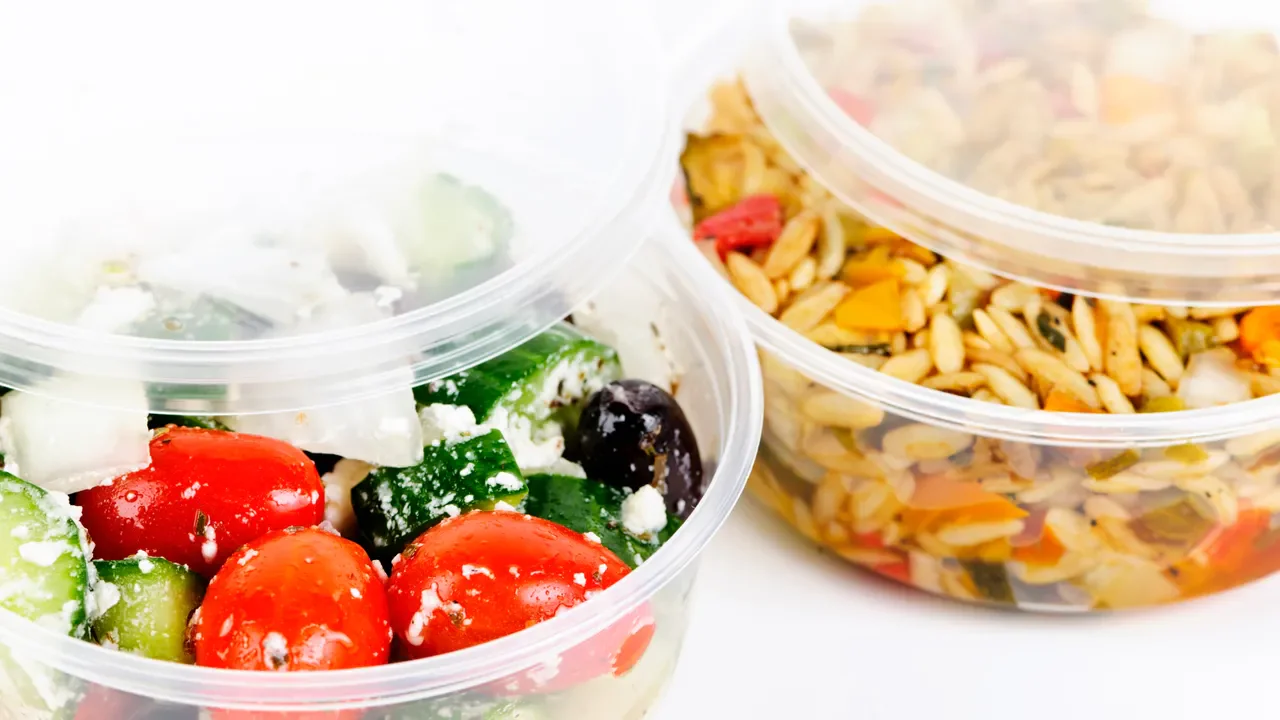
Food grade plastic is a type of plastic material that has been approved by the FDA (Food and Drug Administration) as safe for direct contact with food. These materials won’t affect the taste, smell, or color of your food, and they won’t leach harmful chemicals under normal use conditions. The safest plastics for food contact are marked with recycling numbers 2 (HDPE), 4 (LDPE), and 5 (PP), while you should avoid plastics numbered 3, 6, and 7.
When you’re buying water bottles, food storage containers, or any kitchenware made of plastic, you’ve probably wondered whether they’re actually safe. As someone who works in the kitchenware industry, I’ve learned that understanding food grade plastic isn’t just technical knowledge, it’s practical information that affects your daily health decisions.
What Makes Plastic “Food Grade”?
Food grade plastic means the material meets specific safety standards set by regulatory bodies like the FDA. These plastics undergo rigorous testing to ensure they don’t:
- Leach harmful chemicals into food
- Transfer odors or flavors
- Degrade under typical food storage conditions
- Break down when exposed to acids, oils, or heat within their rated temperature range
Food grade materials are either safe for human consumption or safe to come into direct contact with food products. The key requirement is passing FDA review through Food Contact Substance (FCS) notifications, which prove the material has been tested and approved for food contact applications.
According to the FDA’s regulations on food contact substances, manufacturers must demonstrate that their materials are safe under intended use conditions.
Understanding Plastic Recycling Numbers
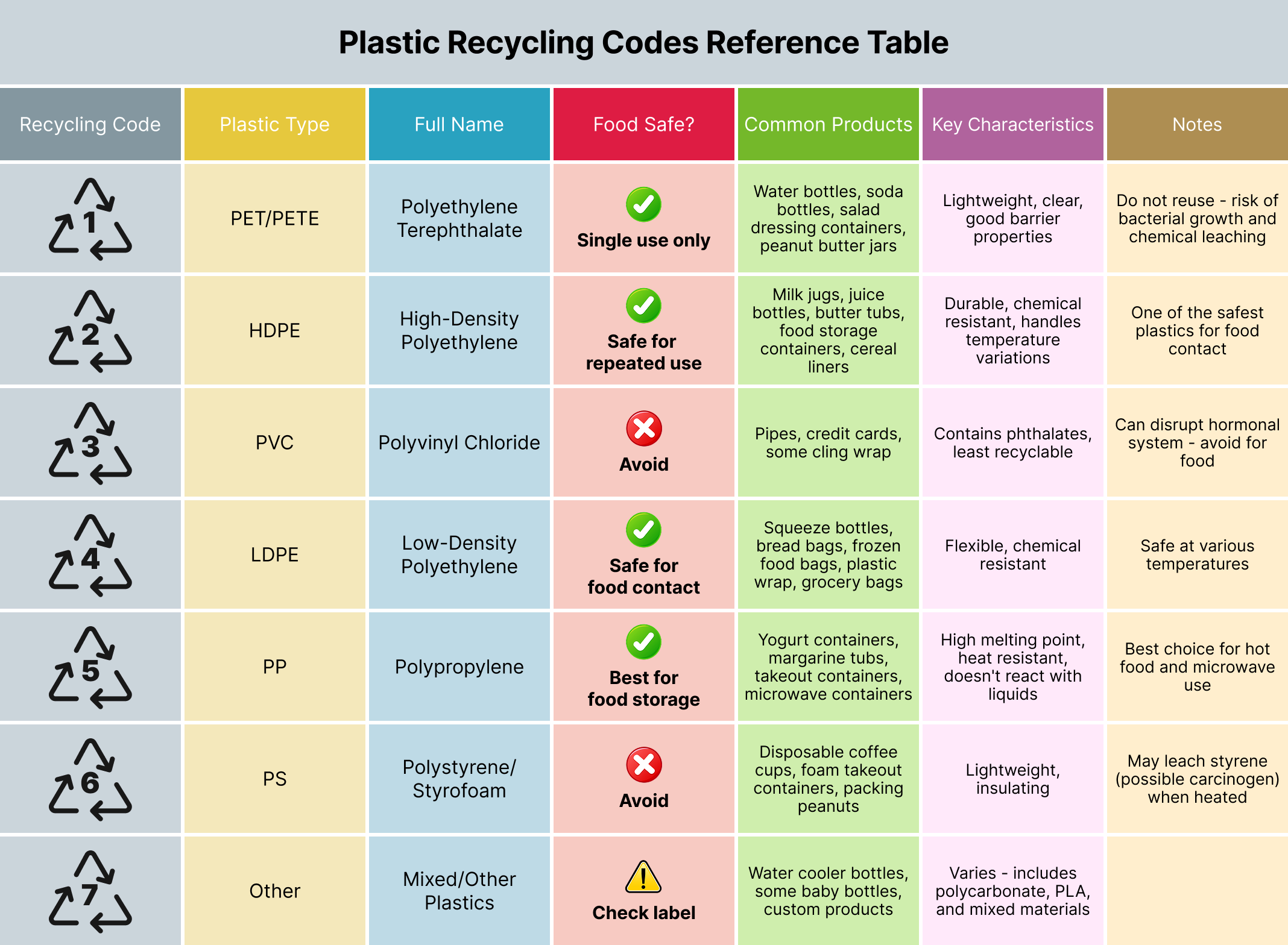
Every plastic container has a small triangle with a number inside—this is your roadmap to food safety. Here’s what those numbers mean:
Safe for Food Contact
#1 – PET/PETE (Polyethylene Terephthalate)
PET is lightweight and commonly used for beverage bottles and cooking oil containers. It’s safe for single use but not recommended for repeated use, as this increases the risk of bacterial growth and potential chemical leaching.
Common products: Water bottles, soda bottles, salad dressing containers, peanut butter jars
#2 – HDPE (High-Density Polyethylene)
HDPE is one of the safest and most commonly used food-grade plastics. It’s durable, doesn’t leach chemicals, and handles temperature variations well. This is the plastic you’ll find in most household food storage containers.
Common products: Milk jugs, juice bottles, butter tubs, cereal box liners, airtight storage containers
#4 – LDPE (Low-Density Polyethylene)
LDPE is more flexible than HDPE, making it ideal for squeeze bottles and plastic wrap. It’s chemically resistant and safe for food contact at various temperatures.
Common products: Squeeze bottles, bread bags, frozen food bags, plastic wrap
#5 – PP (Polypropylene)
Polypropylene is considered the best plastic for food storage. Its high melting point makes it suitable for microwaveable containers, and it’s nonvolatile and doesn’t react to liquids, acids, or bases.
Common products: Yogurt containers, margarine tubs, takeout containers, meal prep containers
Plastics to Avoid
PVC contains phthalates that can disrupt the hormonal system. It’s one of the least recyclable plastics and should be avoided for food contact.
#6 – PS (Polystyrene/Styrofoam)
Polystyrene may leach styrene, a possible human carcinogen, into food products—especially when heated. Those disposable coffee cups and foam takeout containers fall into this category.
#7 – Other/Mixed Plastics
This catch-all category includes everything that doesn’t fit numbers 1-6. Some #7 plastics contain Bisphenol A (BPA), a potential endocrine disruptor. Unless specifically labeled as BPA-free or made from safer materials like PLA (polylactic acid), avoid #7 plastics for food use.
Key Considerations for Food Grade Plastic
Temperature Ratings Matter
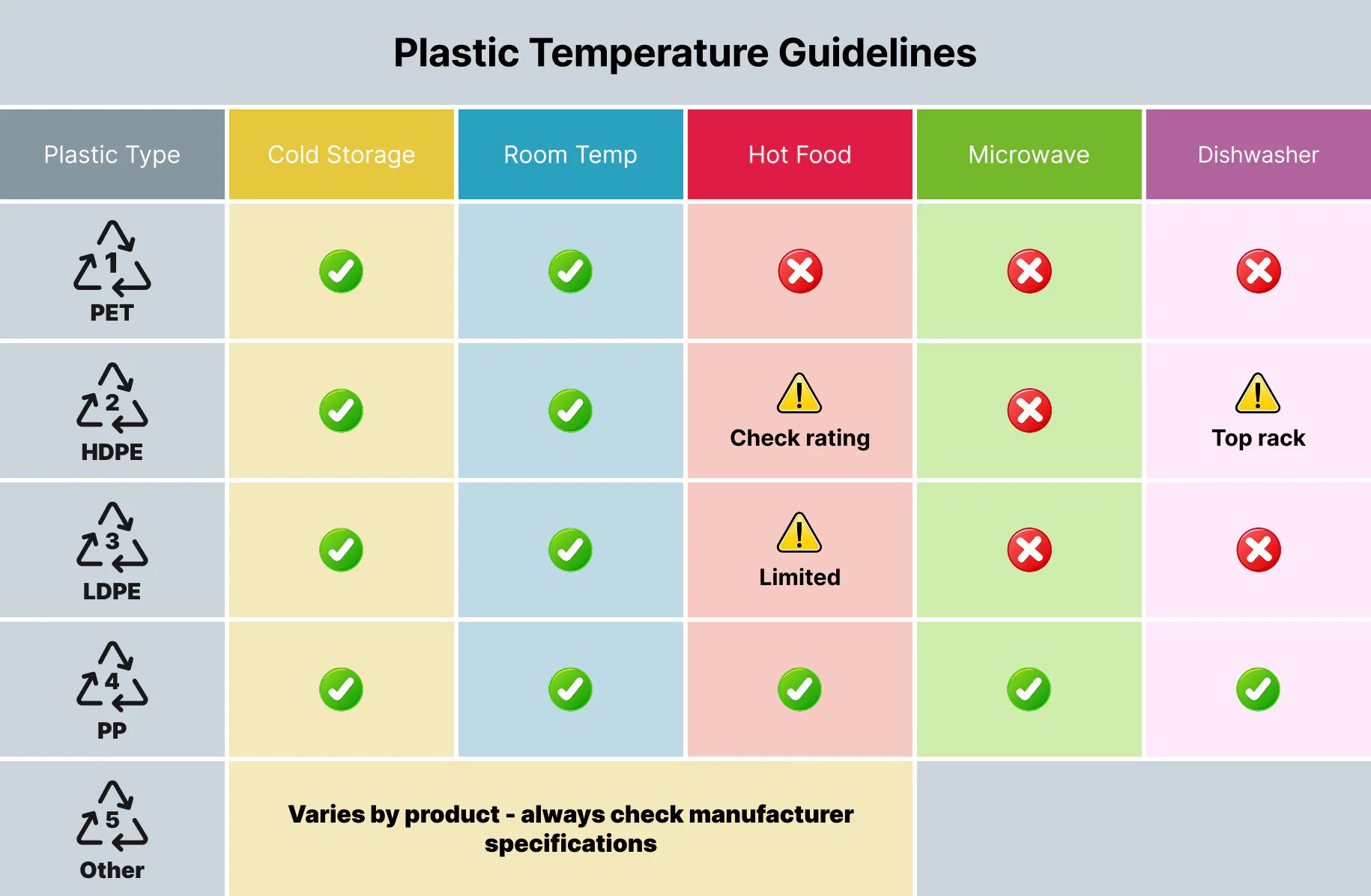
A plastic approved as food grade isn’t automatically safe for all temperatures. Some plastics are only rated for cold storage, while others can handle hot food or microwaving. Always check the specific temperature rating before use, especially when selecting kitchen storage solutions.
Manufacturing Standards
According to FDA regulations, food-grade plastic must be manufactured under specific conditions. Even food-grade resin can become contaminated if produced in unclean facilities or mixed with non-food-grade colorants or additives.
Certification Documentation
Legitimate food-grade products should come with FDA compliance certificates, SGS test reports, or equivalent documentation. This is especially important when purchasing commercial kitchen equipment or bulk quantities.
Common Food Grade Plastic Products
Here are the most reliable food-grade plastic items you’ll encounter:
- Storage containers (PP or HDPE): Meal prep containers, leftover storage, pantry organization
- Water bottles (PET, HDPE, or PP): Look for BPA-free labels on reusable bottles
- Cutting boards (HDPE or PP): Durable and dishwasher-safe options
- Kitchen utensils (PP): Heat-resistant spatulas, ladles, and serving spoons
- Squeeze bottles (LDPE): Condiments, sauces, and cooking oils
- Microwave containers (PP): Heat-resistant meal prep containers
How to Verify Food Grade Plastic
Here’s a practical checklist for identifying safe food-grade plastics:
- Check the recycling number – Look for #2, #4, or #5 in the triangle symbol
- Look for food-safe symbols – A glass and fork icon indicates food contact approval
- Request certifications – Especially important for bulk or commercial purchases
- Check temperature ratings – Verify the plastic can handle your intended use
- Inspect for quality – Food-grade plastics should be smooth, uniform in color, and odor-free
Food Safe vs. Food Grade: Understanding the Difference
These terms are often confused, but there’s an important distinction:
- Food Grade = The material itself is approved for food contact
- Food Safe = The material is food grade AND appropriate for your specific use
For example, a PP container might be food grade, but it’s only food safe for microwaving if specifically rated for that temperature range. This is why checking product specifications on container labels is crucial.
Best Practices for Using Food Grade Plastics
To maximize safety and longevity:
- Never heat non-microwave-safe plastics – Even food-grade plastics can release chemicals when heated beyond their rating
- Replace scratched containers – Damaged plastic harbors bacteria and may leach more easily
- Respect temperature limits – Don’t exceed the manufacturer’s specified temperature range
- Don’t reuse single-use plastics – #1 PET bottles are designed for one-time use only
- Hand wash when possible – Some dishwasher detergents can degrade plastic over time
- Store away from heat and sunlight – UV light and heat can break down plastic over time
Health Implications
The chemicals in non-food-grade plastics can affect children’s development, disrupt the endocrine system, compromise immune function, and potentially increase cancer risk. This is why choosing properly certified food-grade plastics matters—you’re making a health decision for yourself and your family.
When selecting food storage solutions or kitchen containers, prioritize products with clear food-grade certification.
Recycled Plastics and Food Safety
The FDA has approved certain recycled plastics for food contact on a case-by-case basis. According to FDA guidance on recycled plastics, recycled HDPE has been reviewed and approved for over 20 years, and recycled polypropylene began receiving approval in 2013.
However, not all recycled plastics are food safe—contamination can occur during the recycling process. Always verify that recycled plastic products have proper food-grade certification before using them for food contact.
Frequently Asked Questions
Q: Is all food grade plastic BPA-free?
A: Not necessarily. While many modern food-grade plastics are BPA-free, some #7 plastics may still contain BPA, which is a potential endocrine disruptor. Always look for “BPA-free” labels on reusable containers, especially for containers that will hold hot food or liquids.
Q: Can I microwave food in any food grade plastic?
A: No. Only plastics specifically marked as microwave-safe should be used for heating food. Recycle number 5 (PP) is generally microwave-safe, but always check for the microwave-safe symbol. When in doubt, transfer food to glass or microwave-safe containers for heating.
Q: How can I tell if a plastic container is truly food grade?
A: Check for the food-safe symbol (fork and glass icon), verify the recycling number is 2, 4, or 5, and request FDA compliance documentation if purchasing commercial quantities. Avoid containers with strong chemical odors or unclear labeling.
Q: Are recycled plastics safe for food contact?
A: It depends on the specific product and certification. The FDA reviews recycled HDPE and PP on a case-by-case basis. Some recycled plastics can become unsafe during the recycling process, so always verify that recycled plastic products have proper food-grade certification.
Q: What’s the difference between FDA approved and FDA compliant?
A: FDA compliant means a material meets FDA standards for food contact safety. The FDA doesn’t technically “approve” materials but rather reviews submissions and issues no-objection letters or publishes regulations allowing specific uses. FDA compliant is the correct term for food-grade plastics.
Q: How long do food grade plastics last?
A: It varies by type and usage. PP and HDPE containers can last several years with proper care, while PET should only be used once. Replace containers when they become scratched, discolored, or develop odors—these are signs of degradation.
Q: Can I use food grade plastic for hot liquids?
A: Only if specifically rated for high temperatures. Most PP (#5) plastics can handle hot liquids, but always check the manufacturer’s specifications. PET bottles can warp and potentially release chemicals when exposed to hot water, even though they’re food grade for cold beverages.
Q: Is food grade plastic dishwasher safe?
A: Not always. While many food-grade plastics like PP and HDPE can withstand dishwasher temperatures, some may warp or degrade over time. Check product labels for dishwasher-safe markings. Hand washing generally extends the life of plastic containers.
Q: What should I do if a plastic container smells weird?
A: Don’t use it for food. Odd odors indicate chemical degradation or contamination. Even if marked food grade, a container that smells off shouldn’t contact food. This can happen with improperly stored or low-quality plastics.
Q: Are there eco-friendly alternatives to traditional food grade plastics?
A: Yes. PLA (polylactic acid) made from corn starch is biodegradable and increasingly common in food packaging. However, it’s not as heat-resistant as traditional plastics and requires industrial composting facilities to properly break down. Other alternatives include glass, stainless steel, and silicone for reusable kitchenware.
Conclusion
Understanding food grade plastic helps you make informed decisions about the products you use every day. The key points to remember:
- Stick to plastics numbered 2, 4, and 5 for food contact
- Avoid plastics 3, 6, and 7 unless specifically certified BPA-free
- Check for food-safe symbols and proper certifications
- Respect temperature ratings and intended use
- Replace containers when they show signs of wear
Whether you’re stocking your home kitchen with safe storage solutions or selecting quality kitchenware, knowing what to look for ensures you’re choosing products that protect your health without compromising on functionality.
Sources:
- U.S. Food and Drug Administration: Packaging & Food Contact Substances
- U.S. Food and Drug Administration: CFR Title 21 Food and Drugs
- U.S. Food and Drug Administration: Use of Recycled Plastics in Food Packaging

Berry Bian is the blog editor at iHome, focusing on global sourcing, wholesale trends, and practical tips for international buyers. With experience in digital marketing and cross-border trade, Berry shares insights that help small and medium businesses source products more efficiently and avoid common pitfalls. Passionate about connecting buyers with reliable suppliers, Berry writes with a clear and friendly style to make complex topics easier to understand.