







Quick Answer
Most toilet paper sold in the United States is made domestically—over 99% according to industry data. Major brands like Charmin, Scott, Cottonelle, Angel Soft, and Kirkland are all manufactured at plants across America, primarily in states like Pennsylvania, Georgia, Wisconsin, Oklahoma, and South Carolina. China is the world’s largest toilet paper producer by volume, but the US operates a highly self-sufficient supply chain with minimal imports.
Where Is Toilet Paper Manufactured in the United States?
The United States maintains a robust domestic toilet paper industry, with three major manufacturers controlling approximately 80% of the market: Procter & Gamble, Kimberly-Clark, and Georgia-Pacific.


Major Manufacturing States
| State | Key Facilities | Brands Produced |
|---|---|---|
| Pennsylvania | Mehoopany (P&G), Chester (Kimberly-Clark) | Charmin, Scott 1000 |
| Georgia | Albany (P&G) | Charmin, Bounty |
| Wisconsin | Green Bay (P&G) | Charmin, Puffs |
| Oklahoma | Jenks (Kimberly-Clark), Beech Island | Cottonelle, Scott |
| South Carolina | Beech Island (Kimberly-Clark) | Cottonelle, Scott |
| Missouri | Cape Girardeau (P&G) | Charmin, Pampers |
| California | Oxnard (P&G) | Charmin, Bounty |
| Utah | Box Elder (P&G) | Charmin for western markets |
The United States produces approximately 370,000 metric tons of toilet paper annually, making it the world’s second-largest producer after China.
Where Is Charmin Toilet Paper Made?
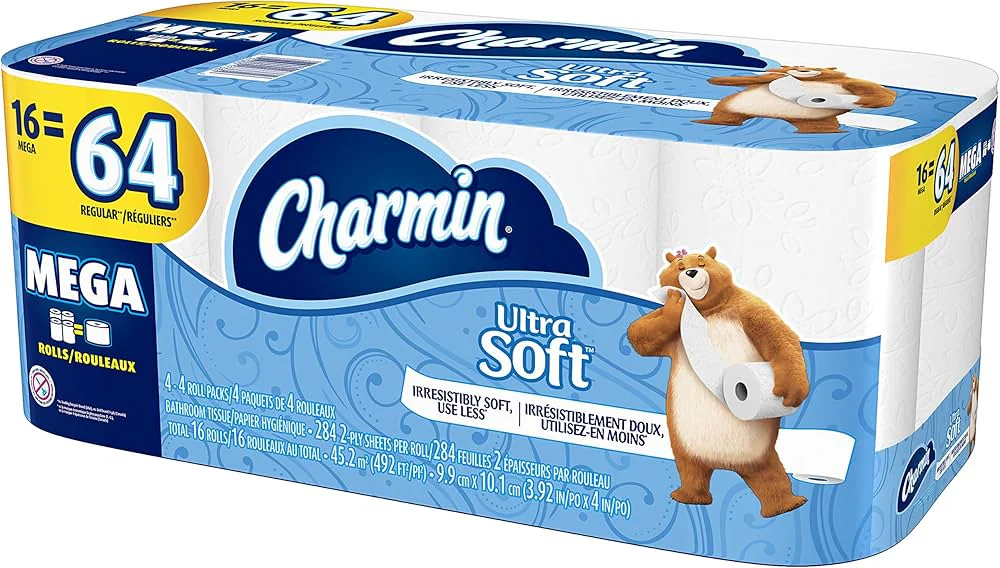
Charmin, America’s best-selling toilet paper brand, is manufactured by Procter & Gamble at multiple facilities across the United States:
- Mehoopany, Pennsylvania – The largest Charmin production site in the world, covering over half a mile under one roof
- Albany, Georgia – Produces both Charmin and Bounty paper products
- Box Elder, Utah – Opened in 2011 to serve western and intermountain regions
- Cape Girardeau, Missouri – Multi-product facility along the Mississippi River
- Green Bay, Wisconsin – Historic paper production site in the Fox River corridor
- Oxnard, California – Serves the western US market
All Charmin toilet paper is made in the USA with no overseas manufacturing, ensuring supply chain stability and consistent quality standards.
Where Is Scott Toilet Paper Made?
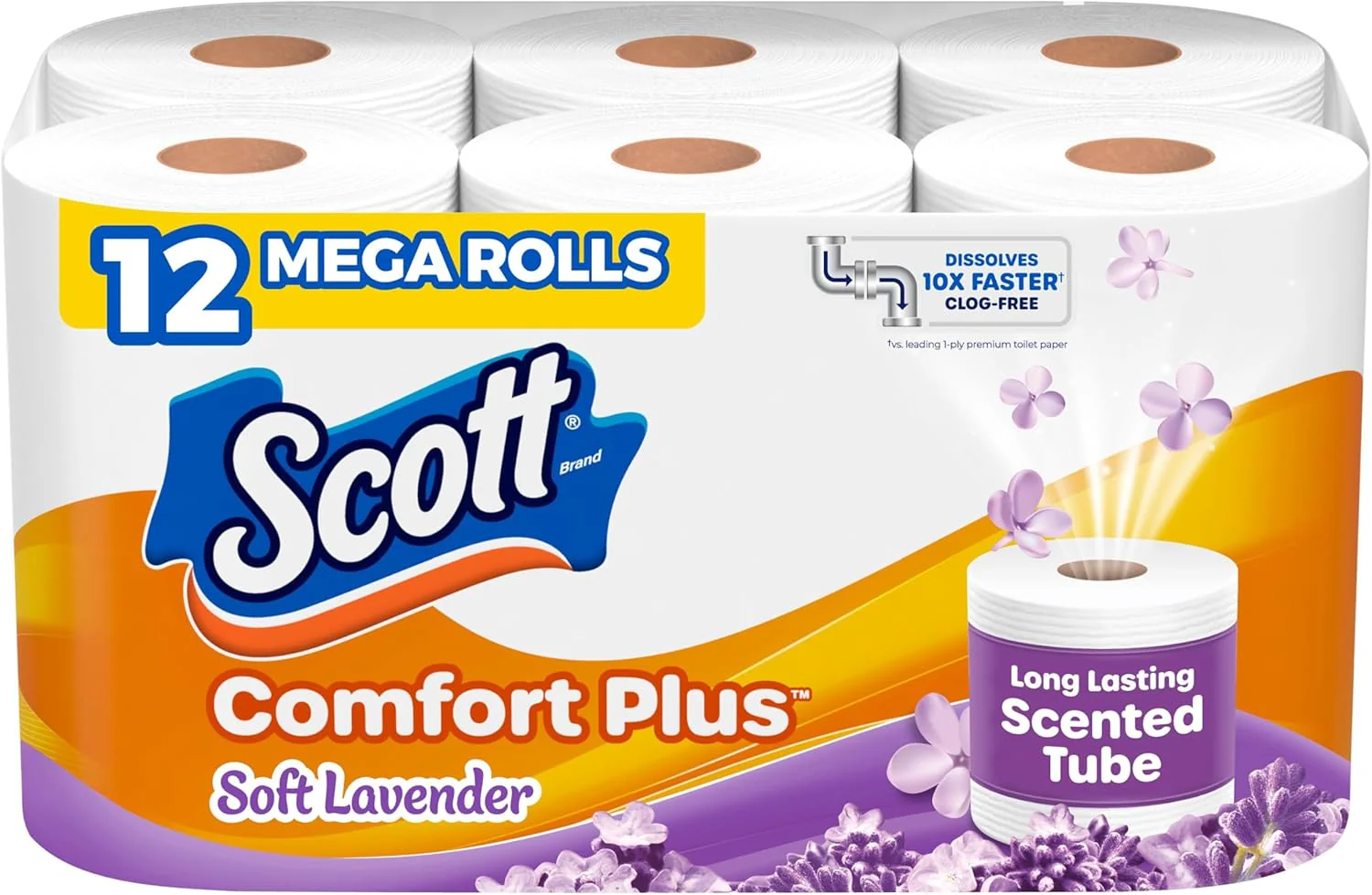
Scott toilet paper, produced by Kimberly-Clark, is manufactured at several US locations:
- Chester, Pennsylvania – Produces 60% of Scott 1000 toilet paper
- Jenks, Oklahoma – Major production facility for multiple Kimberly-Clark brands
- Beech Island, South Carolina – Serves southeastern markets
- Other domestic facilities – Located strategically across the country
Kimberly-Clark, founded in Wisconsin in 1872, now operates from Irving, Texas, but maintains strong manufacturing presence in traditional paper-producing regions.
Where Is Angel Soft Toilet Paper Made?
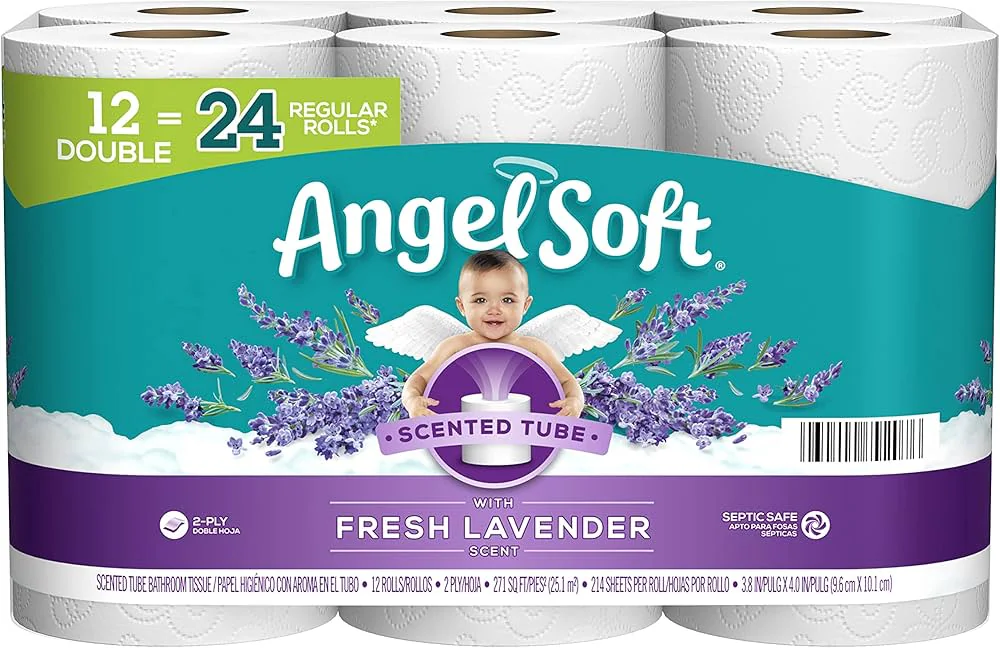
Angel Soft is manufactured by Georgia-Pacific, which operates 14 facilities across 11 US states employing approximately 7,500 workers. Key production locations include:
- Wisconsin – Multiple facilities in the historic paper-producing Fox River valley
- New York – Manufacturing plants serving northeastern markets
- Louisiana – Southern production facilities
- Georgia – Home state operations
Georgia-Pacific also produces Quilted Northern and various store-brand toilet papers at these same facilities.
Where Is Kirkland Toilet Paper Made?
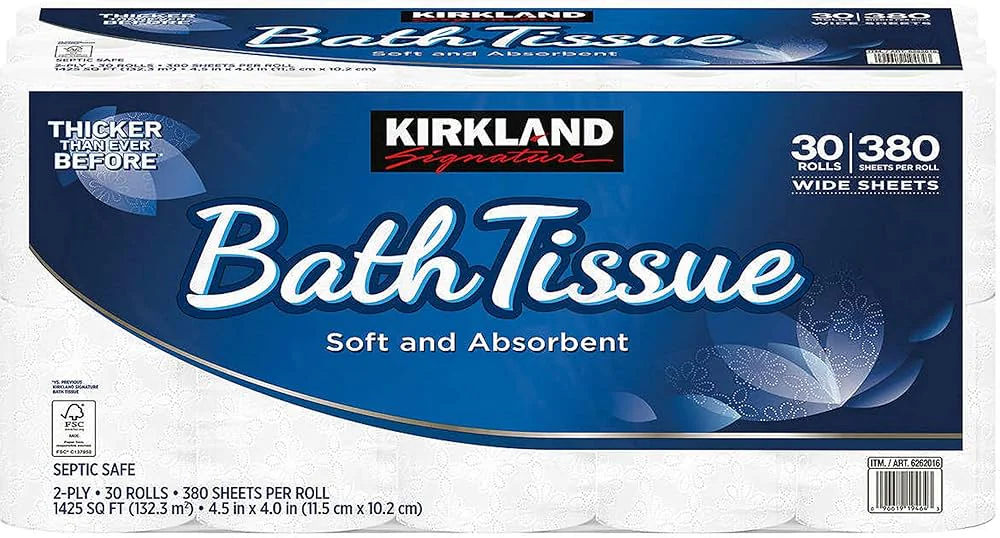
Costco’s Kirkland Signature toilet paper is manufactured by partner companies, primarily:
- Clearwater Paper Corporation – Main manufacturer with facilities in Washington, Nevada, Arkansas, Idaho, and other states
- Georgia-Pacific – Produces some Kirkland products
- Sofidel – European company that manufactures some Kirkland toilet paper
The raw materials are sourced from Canada’s boreal forest, processed in North America, and manufactured in facilities near Kirkland, Washington (Costco’s birthplace and the brand’s namesake). Kirkland toilet paper is made from virgin wood pulp rather than recycled materials.
Where Is Cottonelle Toilet Paper Made?
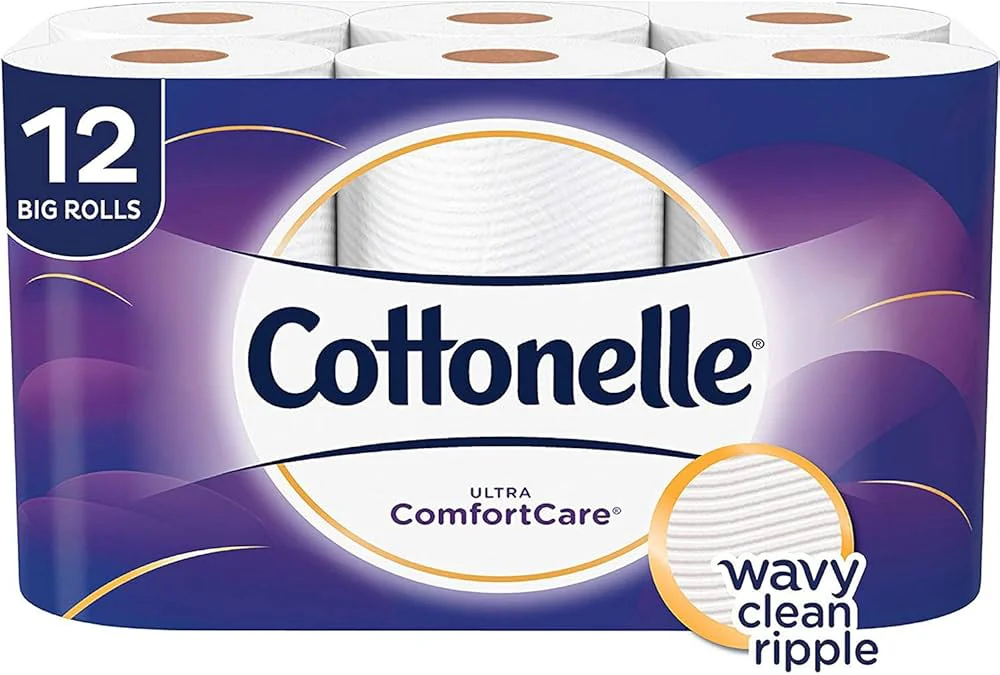
Cottonelle, another Kimberly-Clark brand, is produced at:
- Jenks, Oklahoma – Primary manufacturing facility
- Chester, Pennsylvania – Shared facility with Scott production
- Beech Island, South Carolina – Southeastern production site
Like other major US brands, Cottonelle production is entirely domestic with 24/7 operations to meet consistent demand.
Is Toilet Paper Made From Trees?
Yes, most toilet paper is made primarily from trees, specifically from wood pulp. The manufacturing process typically uses:
- 70% hardwood trees (oak, maple, eucalyptus) – Provide shorter fibers for softness and absorbency
- 30% softwood trees (pine, spruce, fir) – Contribute longer fibers for strength and durability
Virgin Pulp vs. Recycled Paper
| Type | Source | Environmental Impact | Usage in US Market |
|---|---|---|---|
| Virgin Pulp | Freshly cut trees from forests | Higher carbon footprint (3x more than alternatives) | 98%+ of US toilet paper |
| Recycled Paper | Post-consumer paper products | 66% lower greenhouse gas emissions | Less than 2% of US market |
| Bamboo/Alternative | Fast-growing renewable resources | 30% lower greenhouse gas emissions | Emerging market segment |
The average American uses approximately 141 rolls of toilet paper per year, equivalent to about 14 trees per person over a lifetime. One tree typically produces around 800 rolls of toilet paper.
Many major US brands use wood pulp from:
- Canadian boreal forests – Old-growth forests that store more carbon than the Amazon
- Southeastern US tree farms – Managed plantation forests
- Imported eucalyptus pulp from Brazil – Provides short fibers for softness
What Country Makes the Most Toilet Paper?
According to global trade and production statistics, the top toilet paper producing countries are:
| Rank | Country | Annual Production | Global Market Share | Primary Market |
|---|---|---|---|---|
| 1 | China | 6.8 million metric tons | ~17% | Domestic + Export |
| 2 | United States | 3.7 million metric tons | ~9% | Almost entirely domestic |
| 3 | India | 2.6 million metric tons | ~6.5% | Domestic |
| 4 | Japan | 230,000 metric tons | ~5.6% | Domestic + Premium exports |
| 5 | Germany | 180,000 metric tons | ~4.4% | Domestic + EU exports |
| 6 | Brazil | 150,000 metric tons | ~3.7% | Domestic + Regional exports |
China dominates global toilet paper production with 6.8 million metric tons annually and recorded a net trade surplus of $724 million in 2024, making it the world’s top exporter. However, unlike China’s export-focused production, the US produces primarily for domestic consumption with over 99% of American-used toilet paper made within the country.
Global Market Value
The global toilet paper market was valued at approximately $82.5 billion in 2024, with projections to reach $105.7 billion by 2035. China leads in market revenue at $22.3 billion, followed by the United States at $16.3 billion.
Does the US Get Toilet Paper From China?
No, the United States does not significantly import toilet paper from China. The US toilet paper industry is remarkably self-sufficient:
- 90-99% of US toilet paper is made domestically according to multiple industry sources
- 10% or less comes from imports, primarily from Canada and Mexico, not China
- The US actually has a more localized supply chain than most consumer products
Why the US Doesn’t Import from China
- Strong domestic production capacity – Three major companies operate dozens of facilities
- 24/7 manufacturing operations – Mills run continuously to meet steady demand
- Transportation economics – Toilet paper is bulky and low-value, making long-distance shipping uneconomical
- Supply chain resilience – The 2020 pandemic proved domestic production advantages
- Regional distribution networks – Products move quickly from nearby mills to stores
What the US Does Import
While finished toilet paper doesn’t come from China, the US does import:
- Eucalyptus pulp from Brazil – Used to make toilet paper softer and more absorbent (short fibers)
- Specialty products – Some premium or eco-friendly options from Europe
- Raw materials – Wood pulp from Canada’s forests
During the 2024 port strikes, experts confirmed that toilet paper supply would remain unaffected because of domestic production. The NC State College of Natural Resources noted that “while more than 99% of tissue products used by Americans are produced in the U.S., manufacturers rely heavily on eucalyptus pulp imported from Brazil.”
Understanding the US Toilet Paper Supply Chain
Production Process
- Raw material sourcing – Trees harvested from North American forests or imported pulp
- Pulping – Wood chips cooked with chemicals to create fiber pulp
- Bleaching and cleaning – Pulp whitened and refined for softness
- Sheet forming – Pulp mixed with water (99.5% water, 0.5% fiber) and pressed into sheets
- Drying and rolling – Sheets dried to 5% moisture and wound on jumbo “mother rolls”
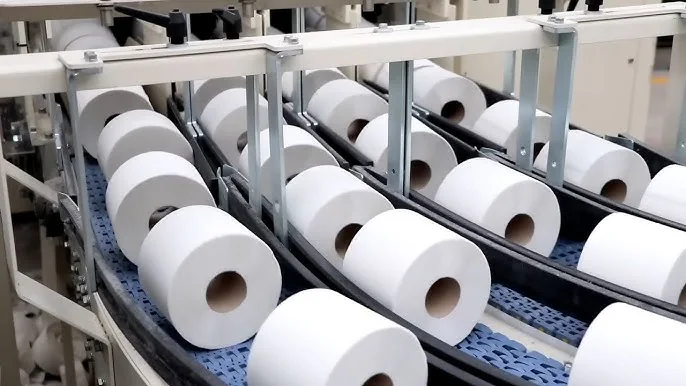
- Converting – Large rolls cut, perforated, and packaged into consumer-size rolls
- Distribution – Products shipped to regional warehouses and retail stores
This entire process typically happens within a few hundred miles of the retail destination, making the supply chain remarkably efficient.
Why Store Shelves Go Empty During Panic Buying
Despite robust production, toilet paper disappeared during the COVID-19 pandemic because:
- Just-in-time inventory – Retailers typically stock only 2-3 weeks of supply
- Demand spike – Purchases increased by 800% in March 2020
- Production limits – Mills already ran 24/7 and couldn’t instantly increase capacity
- Distribution bottlenecks – Getting product from mills to stores takes time
Manufacturers responded by:
- Running at 120% of normal capacity where possible
- Prioritizing consumer products over commercial grades
- Reallocating inventory from institutional suppliers to retail
- Accelerating distribution schedules
Sourcing Toilet Paper and Paper Products from China
While the US doesn’t import finished toilet paper from China, businesses looking to source paper products from Asia should consider:
China’s Paper Product Manufacturing Strengths
- Massive production capacity – World’s largest producer by volume
- Competitive pricing – Lower labor and production costs
- Advanced technology – Modern facilities with efficient processes
- Export infrastructure – Well-established logistics for international shipping
- Alternative materials – Strong bamboo paper production capabilities
For businesses interested in sourcing paper products, household goods, or other consumer items from China, working with an experienced China sourcing agent can help navigate:
- Factory verification and quality control
- Negotiating competitive pricing
- Managing logistics and customs
- Ensuring product compliance and certifications
Companies like IHome specialize in connecting international buyers with verified Chinese manufacturers across categories from household supplies to textiles and cleaning products.
Environmental Considerations
The toilet paper industry faces growing pressure to adopt sustainable practices:
Current Issues
- Deforestation – An area the size of Connecticut is clear-cut from boreal forests daily
- Carbon emissions – Virgin pulp production releases 28.6 million metric tons of CO2 annually
- Water usage – Manufacturing requires significant water resources
- Chemical processing – Bleaching uses chlorine compounds that can harm ecosystems
Sustainable Alternatives
Leading environmental organizations recommend:
- FSC-certified products – Forest Stewardship Council certification ensures responsible forestry
- Recycled content – Brands like Seventh Generation, Marcal, and Green Forest
- Bamboo toilet paper – Fast-growing renewable resource (Who Gives A Crap, The Cheeky Panda)
- Alternative fibers – Wheat straw and other agricultural byproducts
Major brands have begun responding to environmental concerns, though progress remains slow. The NRDC’s 2023 sustainability scorecard gave failing grades to Charmin, Angel Soft, Quilted Northern, Bounty, and Kirkland for using virgin forest pulp.
Is Most Toilet Paper Made in China?
No, most toilet paper is not made in China for American consumers. While China produces the most toilet paper globally (6.8 million metric tons), the vast majority of toilet paper Americans use is made domestically.
However, globally speaking, China is indeed the dominant producer and exporter, supplying developing markets throughout Asia, Africa, and other regions. China’s toilet paper exports exceed 280,000 metric tons annually to developing economies, a 40% increase since 2020.
For consumers in countries without robust domestic toilet paper industries, Chinese-manufactured products often represent the primary supply source.
FAQ About Toilet Paper Manufacturing
Where is Charmin toilet paper made?
Charmin is manufactured by Procter & Gamble at multiple facilities across the United States, including major plants in Mehoopany, Pennsylvania; Albany, Georgia; Green Bay, Wisconsin; and Oxnard, California. All Charmin production is domestic with no overseas manufacturing.
Where is Scott toilet paper made?
Scott toilet paper is made by Kimberly-Clark at US facilities in Chester, Pennsylvania (60% of Scott 1000 production), Jenks, Oklahoma, and Beech Island, South Carolina. All Scott products sold in America are manufactured domestically.
Where is Angel Soft toilet paper made?
Angel Soft is produced by Georgia-Pacific at 14 manufacturing facilities across 11 US states, including plants in Wisconsin, New York, Louisiana, and Georgia. The company employs approximately 7,500 workers in toilet paper production.
Where is Kirkland toilet paper made?
Kirkland Signature toilet paper sold at Costco is manufactured primarily by Clearwater Paper Corporation at facilities throughout the United States, including Washington, Nevada, Arkansas, and Idaho. Some production is also handled by Georgia-Pacific and Sofidel. Raw materials are sourced from Canada’s boreal forests.
Where is Cottonelle toilet paper made?
Cottonelle is manufactured by Kimberly-Clark at facilities in Jenks, Oklahoma; Chester, Pennsylvania; and Beech Island, South Carolina. Like other major brands, all Cottonelle production is located within the United States.
Is toilet paper made from trees?
Yes, most toilet paper is made from trees, specifically from wood pulp. The typical mix includes 70% hardwood (oak, maple, eucalyptus for softness) and 30% softwood (pine, spruce, fir for strength). The average person uses about 14 trees worth of toilet paper in their lifetime.
What country makes the most toilet paper?
China produces the most toilet paper globally at 6.8 million metric tons annually, followed by the United States (3.7 million metric tons) and India (2.6 million metric tons). However, the US consumes nearly all of its production domestically, while China exports large quantities internationally.
Does the US get toilet paper from China?
No, the United States does not import significant amounts of toilet paper from China. Over 99% of toilet paper used in America is manufactured domestically by companies like Procter & Gamble, Kimberly-Clark, and Georgia-Pacific. The small amount of imports (less than 10%) comes primarily from Canada and Mexico.
Is most toilet paper made in China?
For American consumers, no—most toilet paper is made in the USA. Globally, China is the largest producer and exporter, but different regions have their own production hubs. The US, Europe, Japan, and other developed markets primarily use domestically produced toilet paper.
Where is most toilet paper made in the US?
Most US toilet paper is manufactured in key paper-producing states including Pennsylvania (home to the world’s largest Charmin facility in Mehoopany), Georgia, Wisconsin (the historic Fox River paper valley), Oklahoma, and South Carolina. These states have abundant forest resources and established paper industry infrastructure.
Conclusion
The toilet paper manufacturing landscape is both local and global. While China leads worldwide production, the United States operates a highly self-sufficient system where 99% of toilet paper is made domestically. Major brands like Charmin, Scott, Cottonelle, Angel Soft, and Kirkland all manufacture their products at facilities across America, ensuring supply chain resilience and economic benefits for local communities.
For businesses seeking to source paper products or other consumer goods from Asia, understanding global manufacturing capabilities is essential. Professional sourcing services can help navigate international supply chains while ensuring quality, compliance, and competitive pricing.
The future of toilet paper manufacturing will likely balance production efficiency with growing environmental concerns, as consumers increasingly demand sustainable alternatives to virgin forest pulp while maintaining the softness and strength they expect from this essential daily product.
Looking to source household products, paper goods, or other consumer items from China? IHome provides comprehensive China sourcing services, from factory verification to quality control and logistics management. Visit our blog for more sourcing insights or contact us to discuss your procurement needs.

Kelsey Sun is a China procurement expert with over 8 years of experience in cross-border sourcing and supply chain management. As a Senior Sourcing Specialist at iHomeChina, she has successfully connected hundreds of international businesses with vetted Chinese manufacturers. Kelsey specializes in supplier verification, quality control, and multi-factory consolidation strategies, with deep expertise in both major B2B platforms like Alibaba and China’s network of high-quality manufacturers who lack international visibility.