







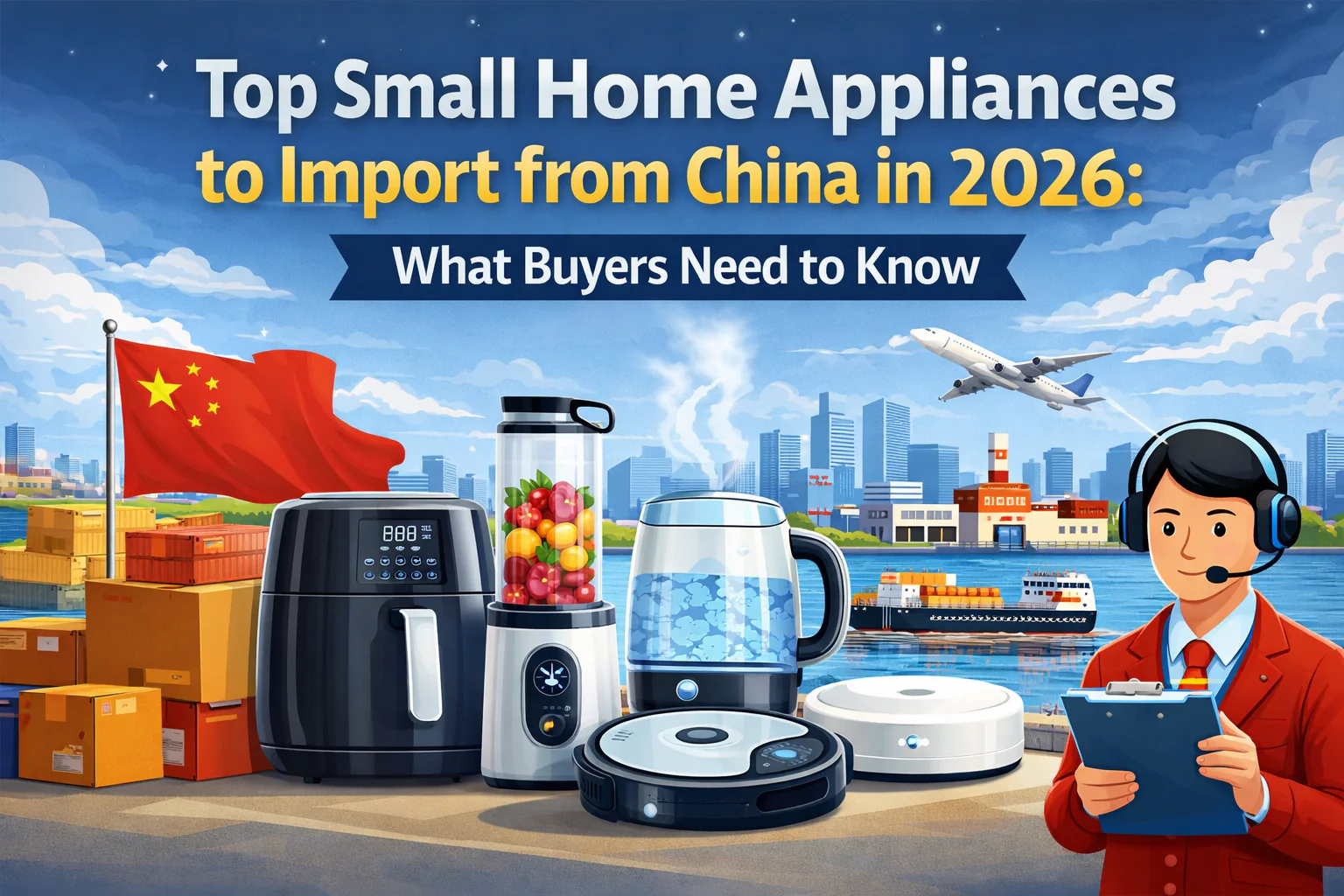
The small home appliance sector is one of the most consistently high-performing categories in global consumer goods trade. As household lifestyles continue to shift — driven by remote work trends, health-consciousness, and the premiumization of everyday experiences at home — demand for smart, convenient, and affordable small appliances shows no signs of slowing. For importers and retailers looking to capitalize on this trend, China remains the world’s most competitive and comprehensive source.
This article looks at the top small home appliance categories gaining traction in global markets in 2026, what makes China the preferred sourcing destination for each, and how buyers can position themselves to import efficiently and profitably.
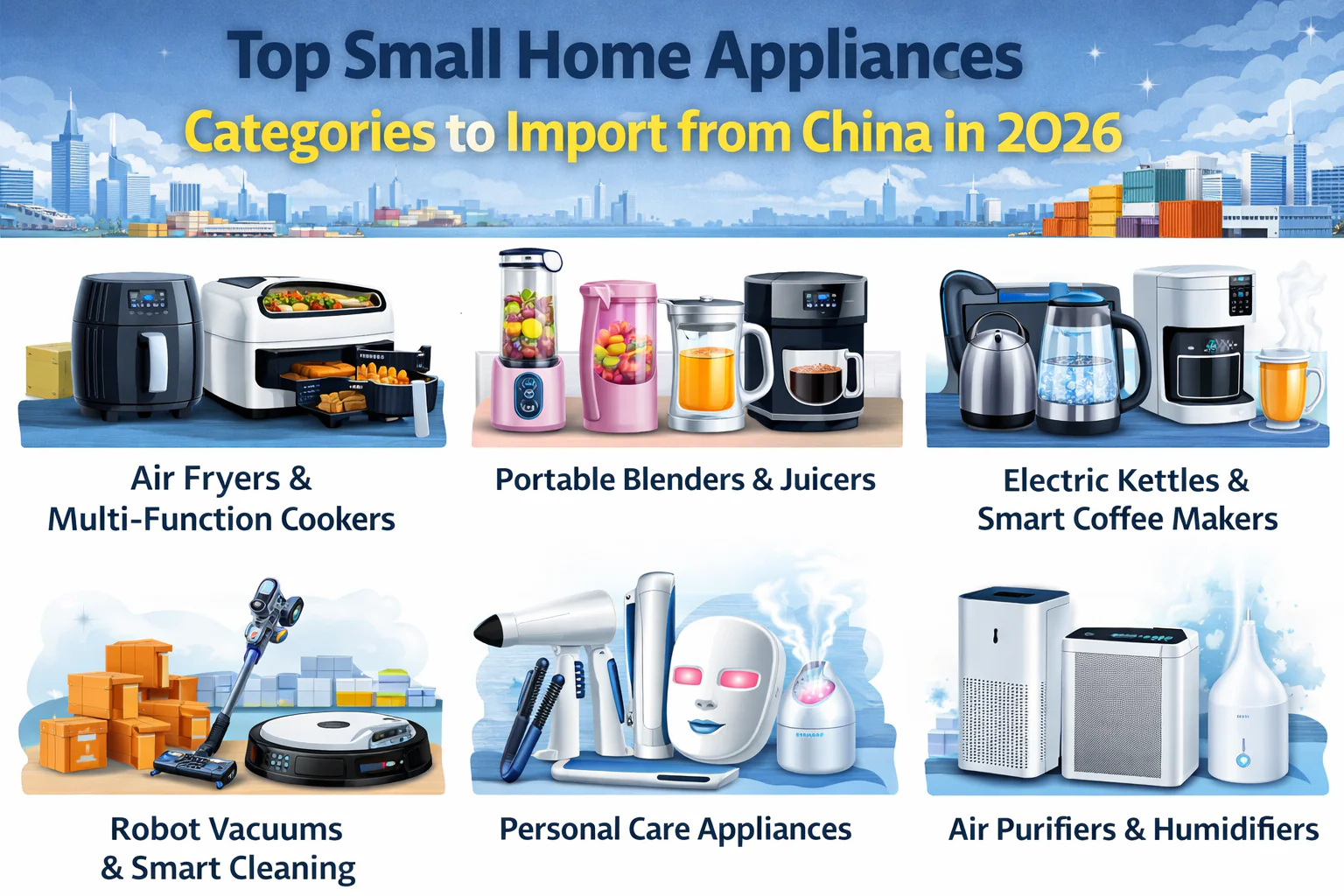
1. Air Fryers and Multi-Function Cookers
Air fryers have evolved from a novelty kitchen gadget into a mainstream household staple across North America, Europe, and Australia. The category has broadened significantly — today’s consumers can choose from compact single-basket units to large-capacity dual-drawer designs, smart models with app connectivity, and hybrid units that combine air frying with grilling, baking, and dehydrating functions.
China’s Guangdong province is the primary production hub for air fryers, with dozens of factories capable of OEM and ODM production at both entry-level and premium price points. Lead times are typically four to eight weeks for customized orders, and many factories hold CE and ETL certifications, enabling export to Europe and North America without additional testing delays. For importers, the air fryer category offers strong retail margins and high repurchase intent, making it an attractive cornerstone of a small appliance range.
2. Portable Blenders and Juicers
The wellness and on-the-go nutrition trend has driven extraordinary growth in portable blenders and personal-size juicers. Compact USB-rechargeable blenders — the kind that blend a smoothie in under a minute and fit in a gym bag — have become one of the fastest-selling small appliance categories on platforms like Amazon, TikTok Shop, and independent e-commerce stores worldwide.
Chinese manufacturers have responded to this demand with rapid innovation cycles, producing units with increasingly powerful motors, BPA-free materials, self-cleaning functions, and longer battery life. The category is particularly well-suited for private label development: MOQs can be relatively low, packaging customization is straightforward, and the product photographs exceptionally well for social media-driven marketing.
3. Electric Kettles and Smart Coffee Makers
Electric kettles remain one of the most universally purchased small appliances globally, and the category continues to grow as consumers trade up from basic models to variable-temperature kettles, gooseneck designs for pour-over coffee, and temperature-hold models. Smart coffee makers — particularly drip machines with app control and built-in grinders — are gaining ground as specialty coffee culture spreads to emerging markets.
For importers, these are relatively stable, replenishable categories with predictable demand cycles. Chinese factories producing kettles and coffee makers have decades of export experience and are well-versed in the certification requirements of different markets. Buyers can typically find fully certified, retail-ready products at factory prices that allow healthy margins even when sold through discounting channels.
4. Robot Vacuums and Smart Cleaning Appliances
Robot vacuums were once considered a premium product category accessible only to high-income consumers. Rapid cost reductions driven by Chinese manufacturing scale have changed that entirely. Today, functional robot vacuums with mapping technology, auto-return charging, and app scheduling are available at factory prices that make them viable for mass-market retail distribution.
Beyond robot vacuums, the broader smart cleaning appliance category — including cordless stick vacuums, UV sterilization devices, and window-cleaning robots — represents a significant growth opportunity for importers willing to invest in slightly higher-complexity sourcing. Working with a sourcing agent that can access Shenzhen’s electronics manufacturing cluster is particularly valuable for this category.
5. Personal Care Appliances: Hair Tools and Beauty Devices
The personal care appliance category — encompassing hair dryers, straighteners, curling wands, facial steamers, LED therapy masks, and microcurrent devices — has experienced explosive growth, fueled heavily by social media marketing and influencer-driven purchasing decisions. Chinese factories in this space have demonstrated an impressive ability to develop new form factors quickly and bring them to market at price points that undercut established Western brands by 40 to 60 percent.
For importers, this category requires careful attention to safety certifications — particularly for heat-generating products — and to intellectual property considerations when developing unique designs. A sourcing agent with OEM and ODM experience can help buyers navigate factory selection, product development, compliance testing, and packaging design to bring a differentiated personal care appliance to market efficiently.
6. Air Purifiers and Humidifiers
Indoor air quality has become a mainstream concern for consumers in urban markets worldwide, creating sustained demand for air purifiers and humidifiers across a wide range of price points. From compact desktop models for personal office use to whole-room HEPA purifiers and smart humidifiers with humidity sensors, Chinese manufacturers offer an extensive lineup suited for retail, e-commerce, and B2B distribution channels.
The category is particularly attractive for importers targeting health-conscious consumer segments. Products with certified HEPA filtration, low noise operation, and smart app integration command premium pricing while still maintaining strong factory-to-retail margins when sourced directly from China. IHome’s home appliances category includes both cleaning appliances and air purifiers, with factory connections capable of supporting both stock orders and customized private label development.
Key Considerations Before You Import
Regardless of which small appliance category you choose to import, several principles apply universally. First, always verify that your supplier holds the certifications required for your target market — CE for Europe, FCC and ETL/UL for the United States, SAA for Australia. Second, do not skip pre-shipment inspection; electrical products in particular carry liability risk if they reach consumers in a defective state. Third, understand your total landed cost — factory price plus freight, import duties, and warehousing — before committing to a retail pricing strategy.
Finally, build a supply chain that can scale. The most successful importers in the small appliance space are those who establish strong factory relationships, maintain open communication channels, and work with sourcing partners who can manage production oversight on their behalf. This allows you to focus on sales, marketing, and market expansion rather than getting bogged down in logistics and supplier management.
Source Small Home Appliances from China with IHome
IHome is a professional China sourcing agent with over 20 years of export experience, serving importers, wholesalers, chain retailers, and e-commerce sellers across more than 120 countries. With offices in Ningbo, Yiwu, and Shantou, and overseas warehousing in Los Angeles, New Jersey, and Atlanta, IHome provides end-to-end sourcing support from supplier identification and factory audits to quality control, freight, and customs clearance.
Whether you are looking to source a single appliance category or build a diversified home goods range, IHome’s team can identify the right factories, negotiate competitive pricing, and ensure your products meet the regulatory requirements of your target market. Visit www.ihomechinabuy.com to get in touch and receive a free consultation from one of their experienced trade specialists.
Sourced by IHome — Your Trusted China Sourcing Agent | www.ihomechinabuy.com

Kelsey Sun is a China procurement expert with over 8 years of experience in cross-border sourcing and supply chain management. As a Senior Sourcing Specialist at iHomeChina, she has successfully connected hundreds of international businesses with vetted Chinese manufacturers. Kelsey specializes in supplier verification, quality control, and multi-factory consolidation strategies, with deep expertise in both major B2B platforms like Alibaba and China’s network of high-quality manufacturers who lack international visibility.