









Your first China import needs a disciplined process. Confirm that the product can enter your market, verify the supplier, approve a sample, calculate landed cost, agree the terms in writing, inspect production, and prepare the customs entry before the cargo leaves China.
The order of those steps matters. A low factory price can quickly lose its appeal when testing is missing, the shipment is late, or the finished goods do not match the approved sample. A well-run first order gives you a process you can use again.
Key Takeaways
- A broker can help file an entry, but importers should confirm their own declaration, document, and payment obligations with the destination-country customs authority.
- Base decisions on landed cost. Include goods, freight, duties, inspection, clearance, and delivery.
- Verify suppliers, approve a written sample standard, and inspect before the balance payment where practical.
- Use this hub to plan the whole order, then use the linked child guides for cost, budget, timing, suppliers, payment, inspection, and customs.
What does first time importing from China involve?
First time importing from China involves seven connected decisions: whether the economics work, what budget you can commit, how long the order may take, who will supply it, how you will pay, how you will check quality, and how the goods will clear customs. In the United States, confirm the importer’s declaration and payment obligations with current U.S. Customs and Border Protection guidance before goods depart.
Start with a product that is compact, straightforward, and legal to sell in your destination. A regulated, fragile, battery-powered, or heavily branded item can work, but it usually needs more compliance checks and closer quality control than a simple consumer product.
Here is the order to follow:
- Check product rules and decide whether the import can make money
- Set a budget, product specification, and target delivery date
- Shortlist and verify suppliers
- Approve samples and put requirements in writing
- Agree payment terms, Incoterms, and a purchase order
- Manage production, quality control inspection, and freight booking
- Clear customs, receive the goods, and record what to improve
The first-order risk gate: Do not release a production deposit until five items are clear: destination-market compliance, supplier identity, an approved sample and specification, a landed-cost model, and written payment and shipping terms. This simple gate catches problems earlier, when they are cheaper to correct.
Is first time importing from China worth it for your order?
Importing can be worthwhile when your expected selling price still covers the complete delivered cost, compliance work, and a realistic allowance for defects or returns. The World Customs Organization describes the Harmonized System as the common international framework for classifying traded goods, but the duty and regulatory treatment still depends on the destination and exact product (WCO).
Before you look for a factory, test the commercial case. Ask whether customers actually want the item, whether it is easy to explain and photograph, and whether you can order enough to make freight economical. Then ask what could make the product difficult: mandatory testing, labelling, trademarks, food-contact rules, children’s-product rules, batteries, radio equipment, or oversized cartons.
Your first order does not need to be large. It needs to answer practical questions: can the supplier follow the specification, will the packaging survive transit, and does the delivered cost leave enough margin for your sales channel?
How do you check product rules before sourcing from China?
Check the product’s likely customs classification and destination-market rules before comparing supplier quotes. The responsible authority depends on the item, its materials, its intended use, its claims, and the country where you will sell it. Consumer goods, food-contact items, cosmetics, medical products, batteries, wireless products, chemicals, and children’s products commonly need extra review.
Treat a supplier’s claim that a product “has CE” as the start of your review, not the end of it. The European Commission explains that CE marking applies only to product categories covered by relevant EU rules, and the responsible economic operator must meet the applicable conformity obligations (European Commission). A mark in a listing photo does not prove that your exact model meets those requirements.
Create a one-page compliance brief before sending an RFQ. Include the product description, materials, intended use, destination country, sales channel, required labels, certifications you believe may apply, and any claims printed on the packaging. A customs broker or qualified product-compliance adviser should confirm the final classification, duty treatment, entry requirements, and testing plan.
Citation capsule: Product compliance must be checked before a supplier is chosen because the same item can face different classification, duty, marking, safety, or licensing requirements by destination. The WCO Harmonized System supports product classification, while local customs and product regulators determine the importer’s actual obligations (WCO Harmonized System guidance).
How do you build a first-import specification and budget?
A supplier can only give a comparable quotation when your specification is clear. Your first-import budget must cover more than the product price: packaging, China-origin charges, samples, inspection or testing, freight, insurance, duties and taxes, broker or port fees, and delivery to your warehouse. The U.S. International Trade Commission provides the official Harmonized Tariff Schedule lookup for U.S. classifications and rates (USITC).
Put the following in every request for quotation:
- Product name, material, dimensions, color, and functional requirements
- Quantity by SKU, packaging, carton markings, labels, and barcode requirements
- Target market, destination city, requested Incoterm, and delivery deadline
- Required certificates, test reports, and product-specific documentation
- Sample requirement, acceptable defects, and quality control inspection point
Use a landed-cost worksheet instead of a fixed “China import percentage.” Freight, duties, tax, port charges, and delivery change with the product, country, shipment size, and shipping method. An EXW quote may look attractive but still fail once international transport and destination charges are included.
| Landed-cost line | Who should confirm it | Why it belongs in the budget |
|---|---|---|
| Product, packaging, tooling | Supplier | Confirms the approved specification is quoted |
| Samples and inspection | Supplier / inspection provider | Helps prevent mass-production surprises |
| China-origin handling | Forwarder / supplier | Can change by port, season, and Incoterm |
| Freight and insurance | Freight forwarder | Depends on mode, volume, route, and cargo |
| Duty, tax, entry costs | Customs broker / authority | Depend on classification and destination |
| Final delivery and returns allowance | Buyer / carrier | Shows the real cost to your selling channel |
Practical budget check: Build two scenarios before placing the order. The base case uses current supplier and freight quotes. The contingency case allows for sample revisions, inspection, delays, or delivery changes. If the numbers work only in the base case, the order has little room for error.
How do you verify a Chinese supplier before paying?
Choose suppliers for their fit with your product and buying process, not for a marketplace badge alone. A factory, trading company, or China sourcing agent can all be suitable. What matters is whether the legal seller, production evidence, sample, inspection rights, and payment route are clear. Incoterms® 2020 allocates delivery tasks, costs, and risk; it does not replace a sales contract (ICC).
Ask three to five candidates to quote the same specification. Compare the product details, MOQ, sample cost, lead time, packaging, relevant documents, payment terms, and named Incoterm. If one quote is dramatically lower, identify the difference before treating it as a saving. It may omit a material, finish, carton standard, test, or delivery cost.
Verify before you pay:
- Legal company name, address, business scope, and the bank account named in the contract
- Factory address or credible production evidence for the quoted product
- Product-specific test reports or certificates, not generic documents from another model
- Capacity, export experience, communication quality, and sample responsiveness
- Willingness to accept written quality criteria and a pre-shipment inspection
Citation capsule: A supplier title does not establish reliability. For a first China import, buyers should match the legal seller, contract, invoice, bank account, product evidence, approved sample, inspection rights, and defect remedy before paying. Incoterms allocate parts of delivery risk and cost, but the sales contract must still define quality and payment obligations (ICC Incoterms® 2020).
How do you approve a sample and write the purchase order?
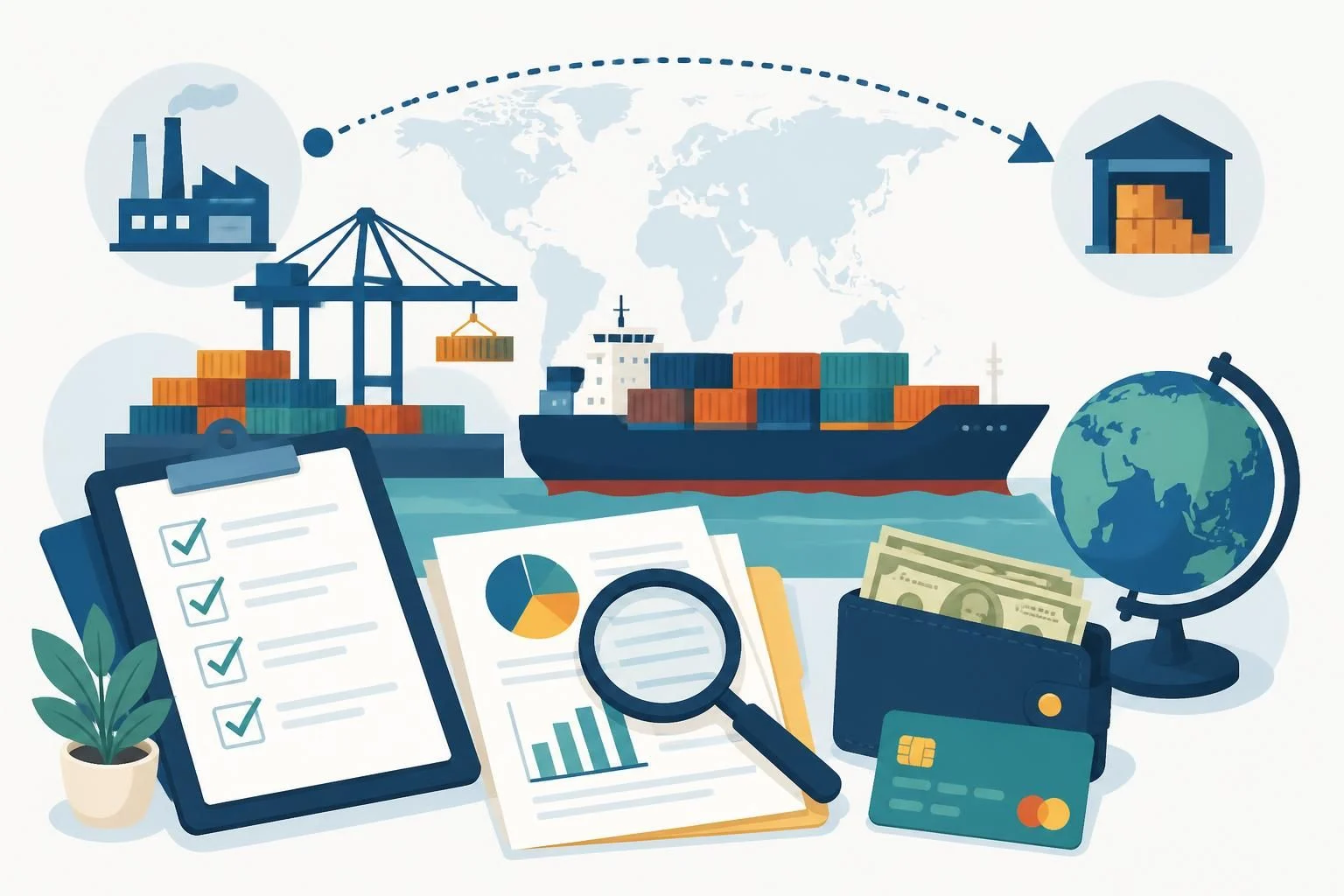
An approved sample and written purchase order turn an online product idea into requirements that can be checked. Your agreement still needs to specify materials, dimensions, defects, tests, packaging, labels, and tolerances. Confirm the inspection scope, sample size, defect definitions, and reporting format with the inspection provider before relying on an inspection result.
Order a representative sample. Test it in the way your customer will use it. Check function, material, color, smell, finish, labels, packaging, instructions, and carton strength. If you need changes, approve another sample. Keep photos and a labelled reference sample on both sides of the transaction.
Your purchase order should state the product specification, quantity tolerance, unit price and currency, packaging, marks, certificates, quality standard, inspection timing, production deadline, payment milestones, and the named Incoterm. Add a change-control rule: no substitutions or material changes without written approval.
This is where many first-time buyers hurry the process. Take the time to settle the sample. Once the goods are loaded, a disagreement over finish, packaging, or materials becomes far more expensive to resolve.
How should you pay a Chinese supplier safely?
Safe payment starts with a traceable method, a recipient that matches the contracted company, and payment milestones tied to agreed documents. ICC’s Incoterms® 2020 contains 11 trade terms that allocate delivery tasks, costs, and risk. It does not decide who owns the goods or when payment is due.
Suppliers may propose a deposit followed by a balance payment, but no split is automatically safe. A 30/70 structure is one commercial arrangement, not an import rule or a protection guarantee. Its suitability depends on the supplier, product, sample, inspection plan, payment channel, and remedy if the order fails inspection.
Before paying, reconcile the purchase order, pro forma invoice, legal seller, and bank-account holder. Stop if the supplier asks you to pay a personal account or an unrelated company. Keep payment proof, emails, approved artwork, sample photos, and inspection reports in one order file.
EXW leaves more transport work with the buyer. FOB can give the buyer clearer control once the goods are loaded at the agreed port. CIF includes seller obligations for carriage and insurance to the named destination port. DDP can look simpler, but it calls for especially clear documentation and responsibility allocation. Confirm the named place and the exact rule in your contract rather than choosing a term from a social-media checklist.
Citation capsule: Payment safety comes from a documented process, not a single payment percentage. Buyers should verify that the contract, invoice, and bank account identify the same legal seller; tie payment milestones to an approved sample, written specification, and inspection evidence; and state a named Incoterm under ICC Incoterms® 2020.
How do you plan quality control inspection and shipping?
Quality control inspection should happen while the supplier can still correct a problem, often before final payment and shipment. Your inspection plan must define the approved sample, defect categories, quantity, packaging, required tests, sample size, and reporting format. Confirm those points with the inspection provider before production begins.
For higher-risk products, set checkpoints before production, during production, and before shipment. A pre-production review can catch a misunderstanding about materials or packaging. During-production follow-up can identify drift while the factory still has time to correct it. A pre-shipment inspection compares the finished goods and cartons with the written requirements before the buyer releases the final payment.
Choose freight from the real delivery requirement. Courier works for samples and urgent small shipments. Air freight can suit higher-value, time-sensitive cargo. Less-than-container-load (LCL) consolidates a smaller shipment, while full-container-load (FCL) may suit enough volume to use a container. Rates, capacity, port conditions, and Chinese holidays change, so ask for a current quote and schedule rather than relying on a fixed transit promise.
Your first-import timeline is longer than transit time
The import timeline includes sourcing, samples, production, quality control inspection, booking, transit, customs, and final delivery. Ship or flight time is only one part of it. Supplier readiness, documents, booking capacity, transport mode, port conditions, customs review, and the delivery appointment all affect the final date.
Build your schedule around decision dates. Suppliers cannot start correctly until the sample and artwork are approved. Forwarders need cargo-ready details to book appropriate space. Brokers need accurate documents before arrival. Your warehouse may need an appointment after clearance. Chinese public holidays can also affect factory output, port operations, and courier collection.
Use a dated order tracker with these milestones: RFQ sent, supplier selected, sample approved, deposit paid, production start, inspection date, cargo-ready date, booking confirmation, document review, departure, customs entry, and warehouse delivery. Mark which party owns each date.
Citation capsule: An import deadline should include supplier selection, sample approval, production, inspection, freight booking, transit, customs, and final delivery. Carrier transit is only one phase. Buyers should assign an owner and a date to each phase, then reserve time for sample changes, document review, and delivery appointments rather than planning around a single transit estimate.
Step 7: Clear customs, receive goods, and learn from the order
Customs clearance starts before the cargo arrives: the importer or appointed broker needs accurate commercial documents, classification, value, origin, and product-specific records. A broker can assist with filing, but the importer should confirm the importer-of-record obligations and entry requirements with the destination-country customs authority before shipment.
Typical shipping documents include a commercial invoice, packing list, bill of lading or air waybill, and any required certificates, test reports, or origin documentation. Your forwarder moves the cargo. Your broker handles entry work where appointed. Neither role removes the buyer’s need to understand the declared product, commercial terms, and final cost.
DDP, LCL, and FCL describe different parts of a shipment. DDP can bundle delivery duties under a seller-led arrangement, but the buyer should still know who acts as importer of record, which documents will be provided, and whether the declared value and classification are accurate. LCL is shared-container freight. FCL uses a full container. Neither term resolves customs obligations on its own.
Inspect the delivery promptly. Count cartons, photograph visible damage, match SKUs and labels to the purchase order, test a defined sample, and report shortages or defects through the channels required by your transport and supply contracts. Then score the supplier: sample accuracy, communication, production discipline, inspection outcome, document quality, and delivery performance.
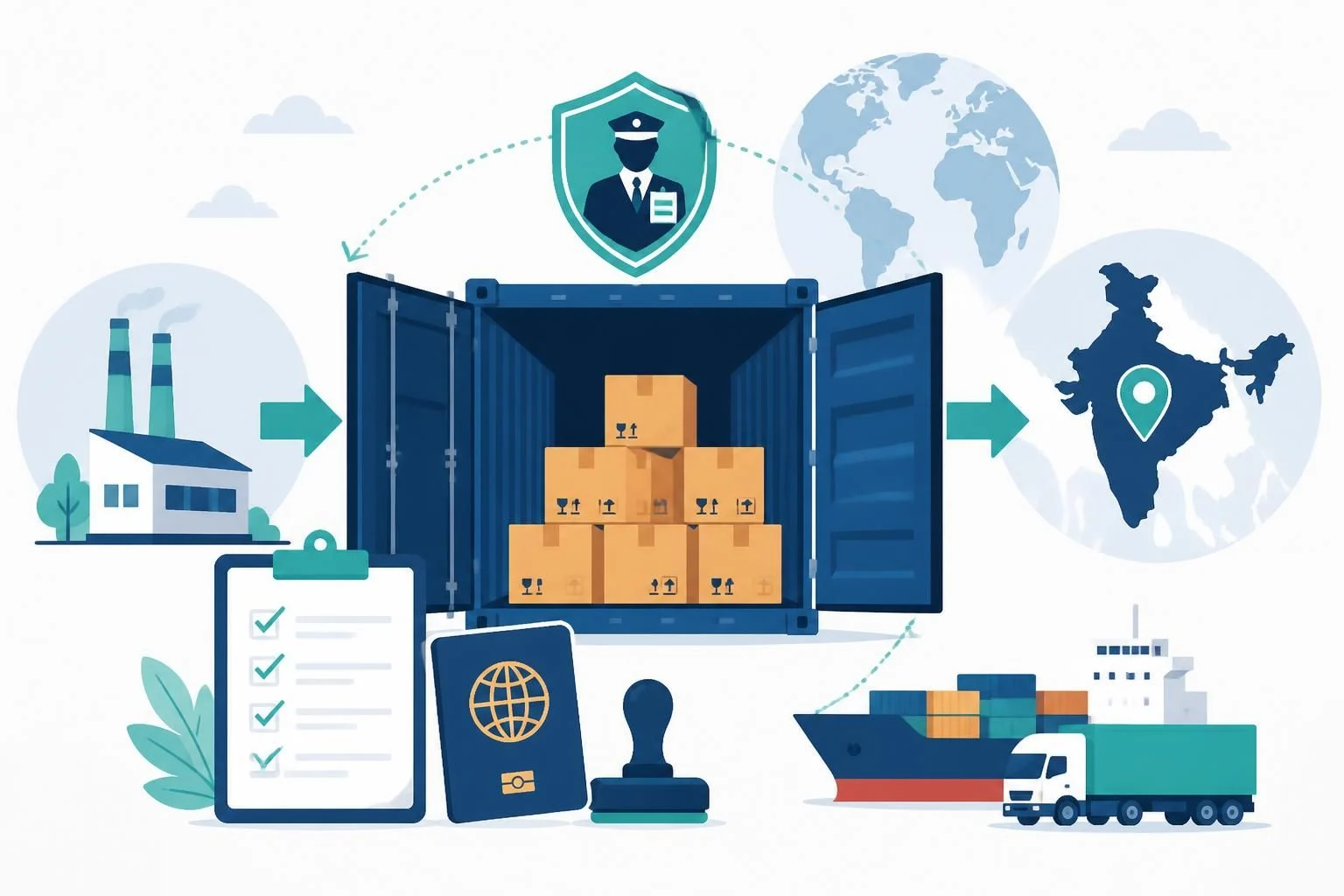
Citation capsule: A customs broker can prepare an entry, but importers should confirm their own classification, value, origin, documentation, and payment obligations with the destination-country customs authority. Before arrival, reconcile the commercial invoice, packing list, transport document, product records, and the broker’s instructions; after delivery, document carton counts and condition immediately.
When should you use a China sourcing agent?
A China sourcing agent is most useful when you need local supplier comparison, factory verification, sample coordination, production follow-up, quality control inspection, or shipment consolidation but do not have that capacity in-house. The buyer should still approve suppliers, samples, specifications, payment terms, and shipping decisions; an agent should make those decisions better informed, not invisible.
Ask what the service includes, how fees are calculated, whether supplier commissions are received, who will hold the purchase contract, and what reports you receive. According to iHome’s internal company information, its service scope currently has a $5,000 minimum order and may use a 3–10% service-fee range, depending on order value and scope. These are iHome-reported figures, not industry averages; confirm current eligibility, inclusions, and fees in writing at the time of inquiry.
If you need help turning a product brief into comparable supplier offers, use iHome’s online sourcing service, or Start a Free Inquiry with your product, destination country, quantity, budget, and required delivery date. The objective is not to add a middleman. It is to add clear checkpoints where you need them.
Before you appoint an agent: Ask for the service scope, fee basis, supplier-commission disclosure, reporting cadence, factory-approval process, inspection handoff, and document-access rules in writing. A first-time buyer should be able to see the decision trail, not just receive an outcome.
Frequently asked questions about importing from China
Do I need an import licence to buy from China?
It depends on the product and destination, not simply on the fact that goods come from China. Food, cosmetics, children’s goods, medical products, radios, chemicals, and controlled items may need additional checks. Confirm product-specific requirements with the responsible authority in your destination market before ordering.
What is the minimum order value for importing from China?
There is no universal minimum import value. Your practical minimum is set by the supplier MOQ, sample and tooling needs, shipment minimums, destination charges, and the margin left after landed cost. iHome’s stated $5,000 minimum order applies to its own service scope, not to every supplier or country. Test the budget using actual quotes.
Is a 30/70 payment term safe for a first China order?
A 30/70 deposit-and-balance split is one commercial arrangement, not a safety guarantee. Match the contracted seller, invoice, and bank account; approve the sample and specification; and decide whether inspection evidence is required before the balance. ICC Incoterms® 2020 governs delivery allocations, not your payment protection.
Should I use DDP for my first China import?
DDP can simplify a seller-led delivery arrangement, but it is not automatically the best option. Ask who acts as importer of record, how duties and taxes are declared, which documents you receive, and what costs are included. Confirm the importer’s entry obligations with the destination-country customs authority even when intermediaries help.
How can I avoid being scammed by a Chinese supplier?
Verify the business identity and bank account, compare several quotes against the same specification, order samples, keep requirements in writing, use traceable payments, and inspect before final payment where feasible. A supplier’s platform profile may be useful evidence, but it does not replace a contract, product documents, sample approval, or an inspection plan.
Start your first China import with fewer blind spots
You do not need to master every trade rule before your first order. You do need to make decisions while you can still control the outcome. Check the product before sourcing. Price the delivered order, rather than the factory unit alone. Verify the seller. Approve a sample. Put quality, payment, and shipping responsibilities in writing. Prepare customs documents before arrival.
When the seven child guides are live, use them as your working library: cost and return, first-order budget, import timeline, supplier choice, safe payment, quality control inspection, and customs clearance. Each one should point back to this guide so buyers can move between the detail and the complete process.
If you are ready to compare suppliers or plan a shipment, Start a Free Inquiry with your product specification, destination, target quantity, budget, and delivery date. You can also download the iHome catalog to start a more focused sourcing discussion, or review why buyers choose iHome for sourcing coordination before deciding on support.

Gong Zheng is a blog editor for iHome, focusing on global sourcing, wholesale market trends, and practical advice for international buyers. Drawing on extensive experience in digital marketing and cross-border trade, he shares expert insights to help small and medium-sized enterprises source products more efficiently and avoid common pitfalls. Passionate about connecting buyers with reliable suppliers, he writes in a clear, approachable style that makes complex topics easy to understand.