








China’s pet food supply chain includes factory-made treats, chews, freeze-dried products, wet food and dry food. But an attractive quotation does not tell you whether a product can enter your target market, whether the quoted minimum covers custom packaging, or whether the supplier controls the production site.
This guide gives pet brands, distributors and importers a practical order of operations: define the product, check market access, verify the factory, compare the real MOQ, approve samples and labels, and calculate landed cost before placing a production order. Requirements depend on the destination and the exact ingredients and process, so use the market examples below as starting points and confirm current rules with the importer or a qualified regulatory professional.
Key Takeaways
– Check destination-market eligibility for the exact product and manufacturing establishment before paying a deposit.
– Ask factories to separate product, formula, SKU and packaging minimums in the quotation. There is no universal MOQ for every pet food format.
– Verify the legal entity and production site, then approve a representative sample, label and written product specification before bulk production.
– Compare landed cost and evidence quality, not unit price alone.
What counts as pet treats, chews and food?
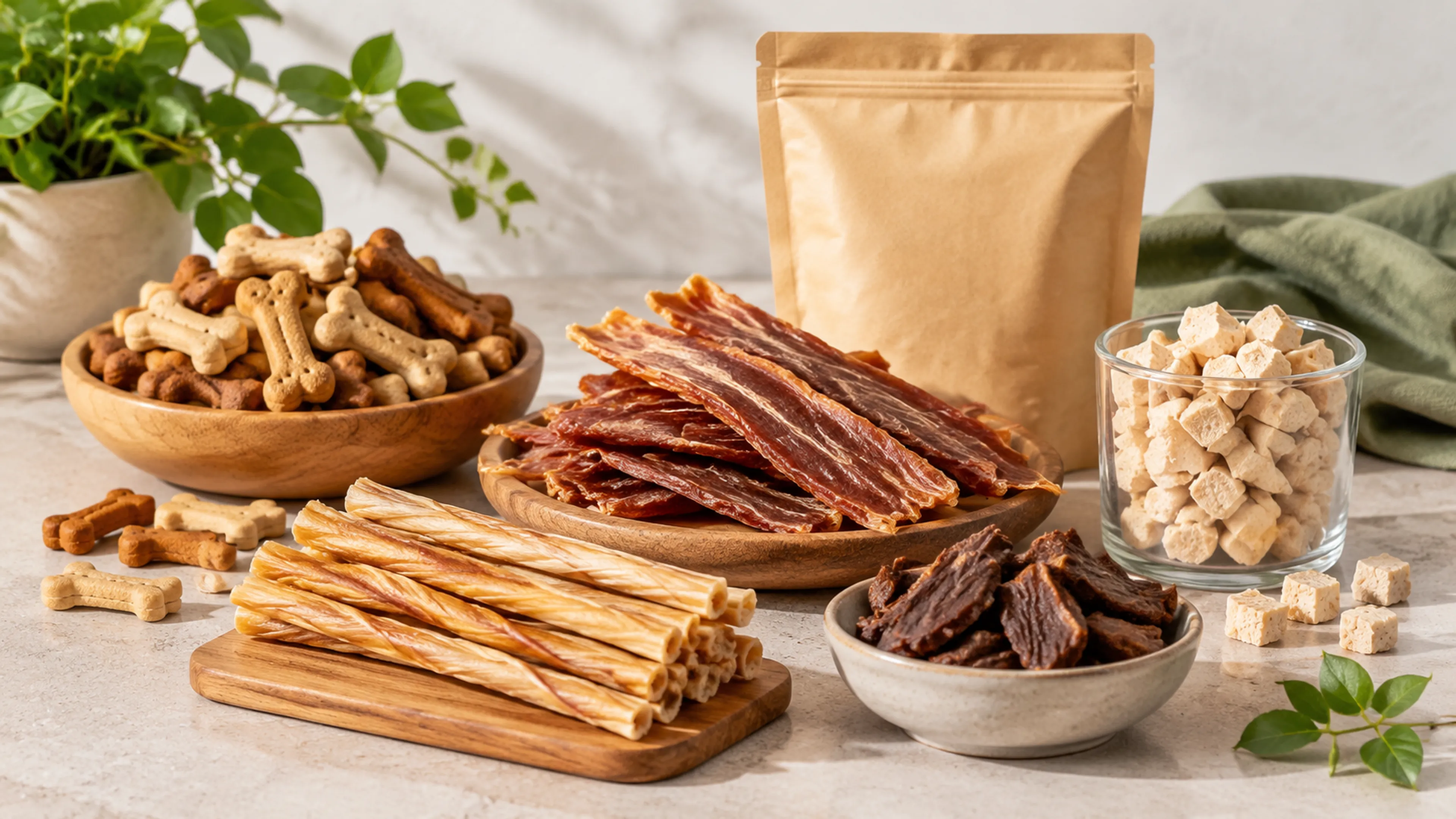
“Pet food” covers products with different purposes and manufacturing processes. A complete dry food, a complementary treat, a meat chew and a freeze-dried snack should not be treated as interchangeable items in a supplier search or compliance review.
Start by describing the product in buyer language and technical terms:
- Intended use: complete daily nutrition, supplemental feeding, reward, dental chewing or another purpose.
- Animal and life stage: dog or cat, and any age or life-stage positioning.
- Ingredients: species and source of animal materials, plant ingredients, additives and functional ingredients.
- Process and format: baked, extruded, cooked, dried, freeze-dried, canned or otherwise processed.
- Claims and presentation: ingredient claims, health or dental claims, pack size, feeding directions and proposed label language.
These details help the importer or regulator determine the appropriate product category and entry conditions. Do not assume a marketing term such as “snack,” “natural” or “dental chew” determines the legal classification. If you are comparing product categories, use the existing China pet products wholesale market guide as a starting point, then confirm factory and import details for each product.
Check destination-market eligibility before comparing suppliers
The first sourcing question is not “What is the factory MOQ?” It is “Can this exact product, made at this establishment, be imported into my destination market under current rules?” Ingredient origin, processing, product type and establishment status can all matter.
United States: check FDA and USDA requirements that apply
The FDA says its import checks for animal food can include food-facility registration, the Foreign Supplier Verification Program (FSVP) importer, labeling and, for applicable low-acid canned or acidified foods, food-canning establishment registration and process filing. Other requirements may apply to specific products. The FDA’s Importing Animal and Veterinary Products page was updated July 16, 2026; use it to identify the relevant checks, not as a substitute for product-specific review.
Products containing animal-origin material can also require review of USDA Animal and Plant Health Inspection Service (APHIS) conditions. The FDA’s Importing Animal Food page explains that APHIS permits may be required for certain animal-origin materials from countries with relevant animal-disease risks. Confirm the exact ingredients and country conditions before production and shipping.
European Union: check the product category, origin and establishment
For animal-origin products, EU entry depends on the applicable authorization for the third country and product category, establishment approval, required certification and border controls. The European Commission’s import-control Q&A describes these controls. Its entry conditions for animal products provides the framework for checking authorized origins and requirements.
The European Commission’s 2025 audit report on China’s pet food export controls found the reviewed official control system supported reliable certification for the report’s stated scope. That is useful context about the control system; it does not establish that every Chinese factory or every product is approved for EU entry.
Make eligibility a documented go/no-go check
Before requesting final prices, ask your importer or regulatory adviser to confirm the product pathway using the current official source for the destination. Save the answer and the supporting product details with the order file. A certificate or audit report from a supplier can support due diligence, but it does not by itself prove that a particular product is eligible to enter a market.
Find and verify a Chinese pet food factory
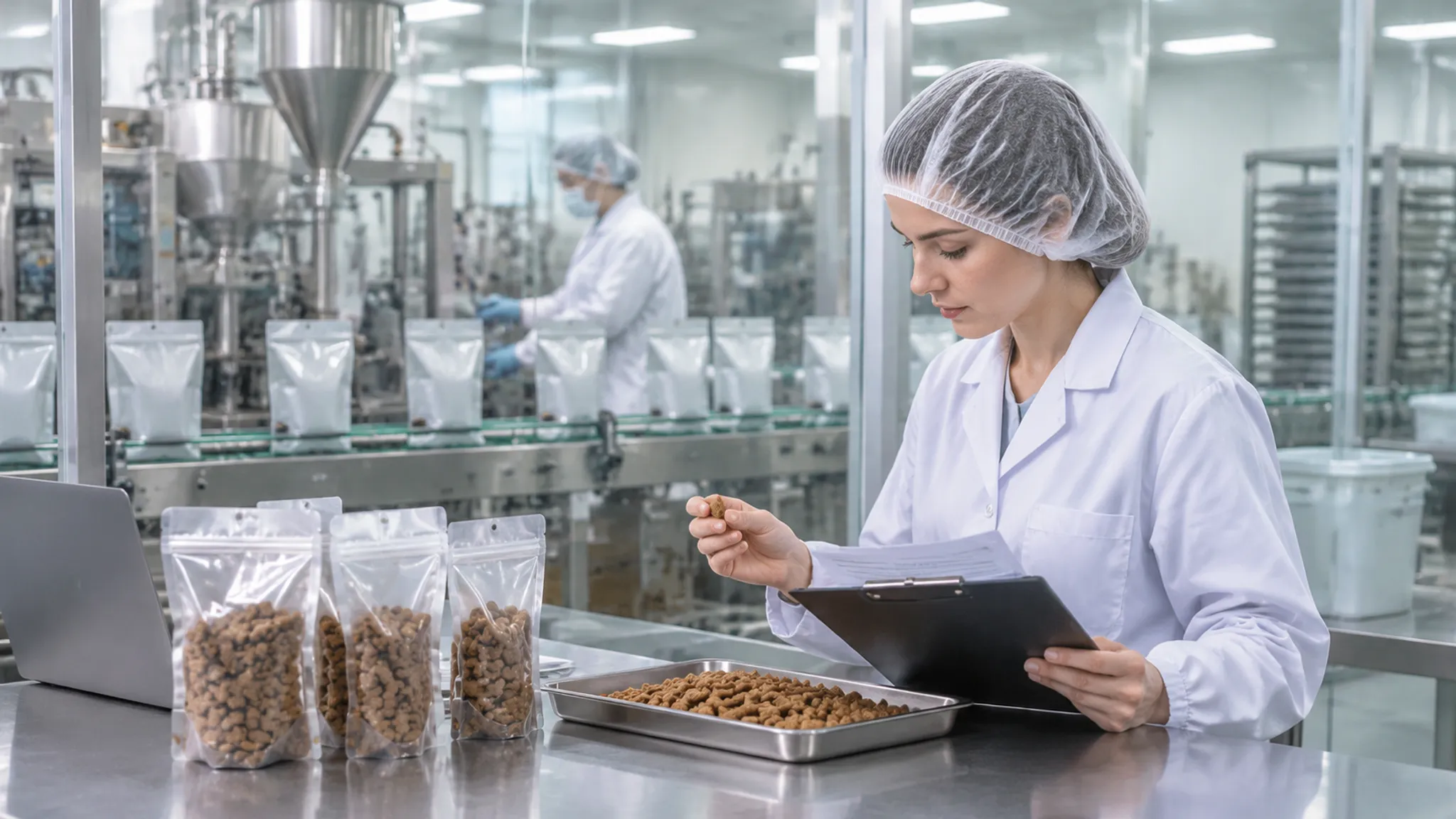
Verify both the company you are buying from and the site that will make the product. A supplier may be a manufacturer, a trading company, or a company coordinating production across several sites. Each arrangement can work, but the buyer should know who controls the formula, records, production and corrective actions.
Ask shortlisted suppliers for:
- The legal company name, business license and registered address.
- The full production-site address and a clear statement of whether the site is owned, operated or subcontracted.
- Current registrations, approvals, export-market listings and audit documents relevant to the specific product and destination.
- A product specification and ingredient list, including animal species and ingredient origins where relevant.
- Sample batch records, traceability information and recent test reports for comparable products, with sensitive client details redacted if needed.
- The name of the party responsible for label review, batch release and managing nonconforming products.
Check that the company name and site address match across business records, registration evidence, audit documents, test reports and the quotation. Where an official destination-market establishment list exists, verify the site there rather than relying only on a PDF sent by the supplier. If a trader is involved, ask which factory will produce each SKU and whether that factory can be named in the order documents.
An audit logo or certificate is not a complete factory assessment. Confirm the issuing organization, scope, site, covered processes, validity dates and any exclusions. Define the exact supplier-verification work you need in the sourcing inquiry.
What MOQ should you expect?
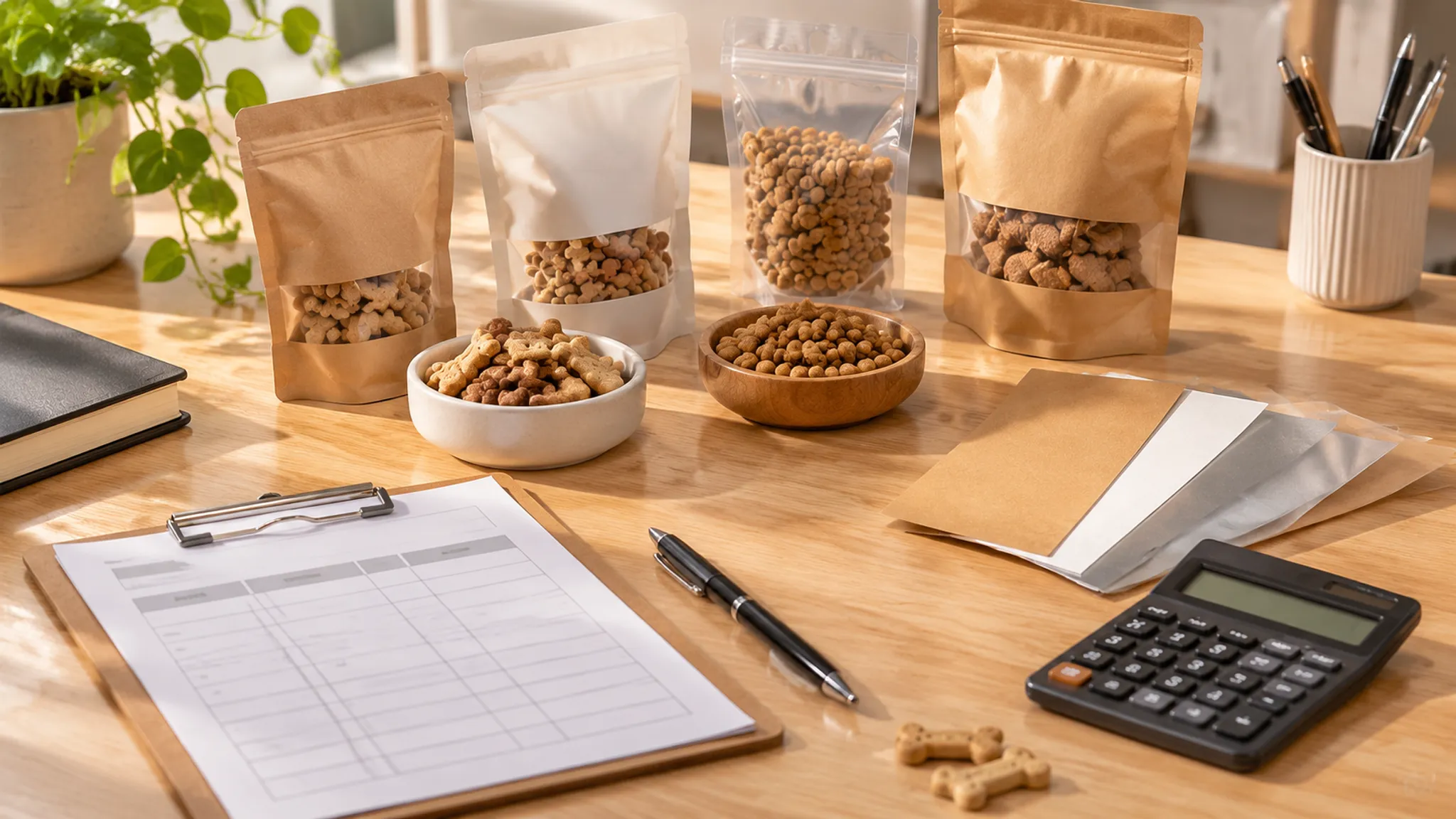
There is no reliable universal MOQ for private-label pet treats, chews or food. Minimums vary by product format, production line, ingredients, formula changes, number of flavors or SKUs, packaging method and whether the factory can use stock packaging.
Ask for each minimum as a separate line item. For every proposed SKU, request the minimum for:
| MOQ component | What to confirm |
|---|---|
| Product run | Minimum finished units or weight per production batch |
| Formula or flavor | Whether each recipe, protein or flavor has its own minimum |
| Packaging | Minimum order for printed pouches, labels, cartons and inserts |
| SKU mix | Whether volume can be split across sizes or flavors |
| First order | Whether a pilot or stock-packaging run is possible |
| Repeat order | Whether the minimum changes after artwork, tooling or formula approval |
Ask the supplier to state the unit of measure, pack size, number of SKUs, included packaging, overrun/shortage tolerance, price breaks, production lead time and quotation validity. A low product-run minimum can still require a larger cash commitment if printed packaging has a separate minimum. Conversely, stock packaging or a shared production plan may change the economics, subject to product and regulatory suitability.
Do not compare quotes until they describe the same formula, pack size, label, carton configuration and delivery term. If you are not ready for a large branded run, ask whether samples, stock packaging or a smaller pilot are available and what cannot be customized at that volume. Treat any MOQ figure from a website as a starting question, not a market-wide benchmark.
Match the product format to your plan
Choose the product format based on the customer, target claims, destination eligibility, shelf-life needs, shipping constraints and the factory’s documented capability. Different processes may require different equipment, ingredient controls, testing and packaging.
- Biscuits and baked treats: clarify recipe, texture, pack size, breakage tolerance and any claims on the label.
- Meat jerky and dried treats: document animal species, ingredient origin, processing controls and the testing plan relevant to the product and market.
- Chews and dental products: define material composition, dimensions, texture and intended use; do not make dental or health claims without substantiation and label review.
- Freeze-dried products: confirm raw material sourcing, process details, moisture or shelf-life specifications and packaging barrier requirements.
- Wet or canned food: identify the processing category and confirm any specific facility or process filings that apply in the destination market.
- Dry food: specify nutritional profile, kibble size, packaging and the intended complete or complementary feed positioning.
Use a product brief to compare suppliers on the same basis: formulation status, target cost, pack format, market, estimated order quantity, required claims and evidence needed. Ask a factory to distinguish what it manufactures in-house from what it buys or subcontracts. A broad catalog does not prove that every listed format is produced at the same site.
Approve samples, labels and production controls
Approve a representative sample and written specification before bulk production. The sample should match the intended formula, process, dimensions, pack size and key sensory or physical characteristics. Record the approved version so production and inspection teams have an objective reference.
Your order file should include:
- Final ingredient declaration, product specification and claims approved for the target market.
- Label artwork and packaging specification, reviewed by the importer or qualified market specialist.
- A sample approval record with date, version and agreed tolerances.
- A risk-based test plan and batch or lot identification requirements.
- Carton, net-weight, shelf-life and storage specifications.
- A process for notifying you about ingredient, site, process or packaging changes.
Testing should follow the product’s ingredients, process and hazards, and the destination’s requirements. Do not copy a generic testing panel without checking whether it addresses the actual risks. FDA’s Import Alert 72-07 reports antibiotic and antiviral residues identified in poultry jerky-type treats from China during FDA investigation. This is a specific finding about investigated products, not evidence that all products from China have the same issue. It is a reason to define ingredient traceability and appropriate lot controls with the responsible importer and testing professionals.
Before shipment, arrange an inspection or document review that checks the finished lot against the approved specification, label, quantity and packaging. For freight planning, use iHome’s logistics and warehouse service information and confirm the actual route, cargo terms and destination charges with the logistics provider.
Calculate landed cost and order risk
The factory unit price is only one part of the purchase cost. Compare the complete order on the same delivery basis, and include costs that change with packaging, testing, inspection, shipping and import clearance.
Use this checklist in the quote comparison:
- Product price and price breaks at realistic quantities.
- Sample, formula development, tooling, artwork and packaging setup costs.
- Printed packaging minimums, extra packaging stock and carton specifications.
- Laboratory testing, inspection and any required certificates or document preparation.
- Incoterm, port or delivery point, freight mode, cargo insurance and transit assumptions.
- Customs classification, duties, taxes, broker charges and destination handling, confirmed by the importer or customs professional.
- Payment terms, production lead time, quote validity and responsibility for defects or rejected lots.
Request a written quotation that identifies the manufacturer and production site, product version, quantity by SKU, pack configuration, packaging, delivery term and validity date. Compare suppliers using a scorecard that gives weight to eligibility evidence, traceability, specification control, communication and total cost. The lowest unit price is not comparable if it excludes packaging or assumes a different delivery term.
If the product, destination and order plan are defined, iHome provides a free catalog download. Include the destination market, animal species, product format, formula status, target quantity and packaging needs so suppliers can respond on comparable terms.
Common questions about sourcing pet food from China
What is the MOQ for private-label pet treats from China?
It depends on the product, formula, production line, packaging and number of SKUs. Ask for separate product and packaging minimums, then request a written breakdown for the exact pack size and flavors you want.
Can I import dog treats from China into the United States or EU?
Possibly, but eligibility depends on the exact product, ingredients, manufacturing establishment and current destination rules. Check the relevant FDA and USDA requirements for the United States or the European Commission’s entry conditions for the EU before placing a production order.
What documents should I request from a factory?
Start with the legal company and facility details, applicable registration or listing evidence, product and ingredient specifications, traceability records, relevant audit documents, test reports and draft label. The destination-market importer should confirm which documents are required for the specific shipment.
Is a factory certificate enough to prove a product can be imported?
No. A certificate may show that a specific site or process was assessed within a defined scope, but market eligibility depends on the applicable product and destination rules. Verify the exact site and product through current official sources and the importer.
Should I buy directly from a manufacturer or through a trading company?
Either can be workable. Confirm who controls production, communicates changes, holds traceability records and is responsible for resolving defects. If a trading company coordinates the order, identify the actual production site for each SKU in the order records.
A safer first order starts with the product brief
Before you commit, write down the product format, ingredients, target market, claims, pack size, likely quantity and packaging requirements. Use that brief to confirm eligibility, verify the production site, compare itemized MOQ terms, approve a representative sample and calculate landed cost. Recheck the relevant official rules before shipment because requirements can change.
For an inquiry, share the destination market, product format, formula or ingredient list, target order quantity and packaging plan. Contact iHome about China sourcing to discuss supplier options and the next checks for your order.

Gong Zheng is a blog editor for iHome, focusing on global sourcing, wholesale market trends, and practical advice for international buyers. Drawing on extensive experience in digital marketing and cross-border trade, he shares expert insights to help small and medium-sized enterprises source products more efficiently and avoid common pitfalls. Passionate about connecting buyers with reliable suppliers, he writes in a clear, approachable style that makes complex topics easy to understand.